

The right on-call tool is the one that reliably reaches the correct responder, reduces alert noise, integrates with your existing systems, and supports your team through the full incident lifecycle.
On-call tooling has shifted from a scheduling convenience into a core reliability control. In 2026, outages are no longer evaluated only by downtime, but by response quality, communication clarity, and post-incident learning. Teams that treat on-call tools as calendar replacements struggle with missed alerts, alert fatigue, and burnout. Teams that choose platforms aligned with their operational maturity gain faster resolution times and more resilient systems.
What Is an On-Call Tool and Why It Matters in 2026
An on-call tool manages responder availability, alert escalation, and engagement during incidents to protect system uptime and reduce operational risk.
Early on-call practices relied on static rotations and manual escalation. That model fails in modern distributed systems where incidents are noisy, fast-moving, and often cross team boundaries. Today’s on-call tools sit between monitoring systems and humans, acting as decision engines that determine who is contacted, how aggressively, and with what context.
In 2026, on-call tooling is also a people system. Poor alerting design drives burnout, attrition, and institutional knowledge loss. Well-designed platforms create predictability, fairness, and psychological safety during high-stress events.
Top On-Call Tools Compared (2026)
The best on-call tools differ primarily in scale, automation depth, and how tightly they integrate with incident response workflows.
| Tool | Best For | Core Strengths | Key Trade-Offs |
|---|---|---|---|
| Rootly | Teams wanting full incident lifecycle coverage | Unified on-call, incident response, and post-incident analysis. / Automation-first workflows reduce manual toil and improve consistency. | Requires upfront process alignment to fully unlock automation value. |
| PagerDuty | Large enterprises with complex escalation needs | Industry-leading alerting, extensive integrations, advanced analytics, and strong escalation controls. | Can feel heavyweight and costly for smaller or less mature teams. |
| Incident.io | Slack-centric engineering teams | Slack-native workflows, fast adoption, and strong in-incident collaboration experience. | Less suited for teams needing deep cross-tool orchestration outside chat. |
| Opsgenie | Atlassian-focused teams (legacy users) | Tight Jira and Atlassian ecosystem integration for alerting and scheduling. | Announced April 2027 end-of-life requires planned migration to avoid operational risk. |
| Grafana OnCall | Teams invested in open-source observability | Deep integration with Grafana stack, metric-rich alert context, and self-hosting flexibility. | Requires more configuration and operational ownership than managed platforms. |
The Five Primary Search Intents Behind “On-Call Tools”
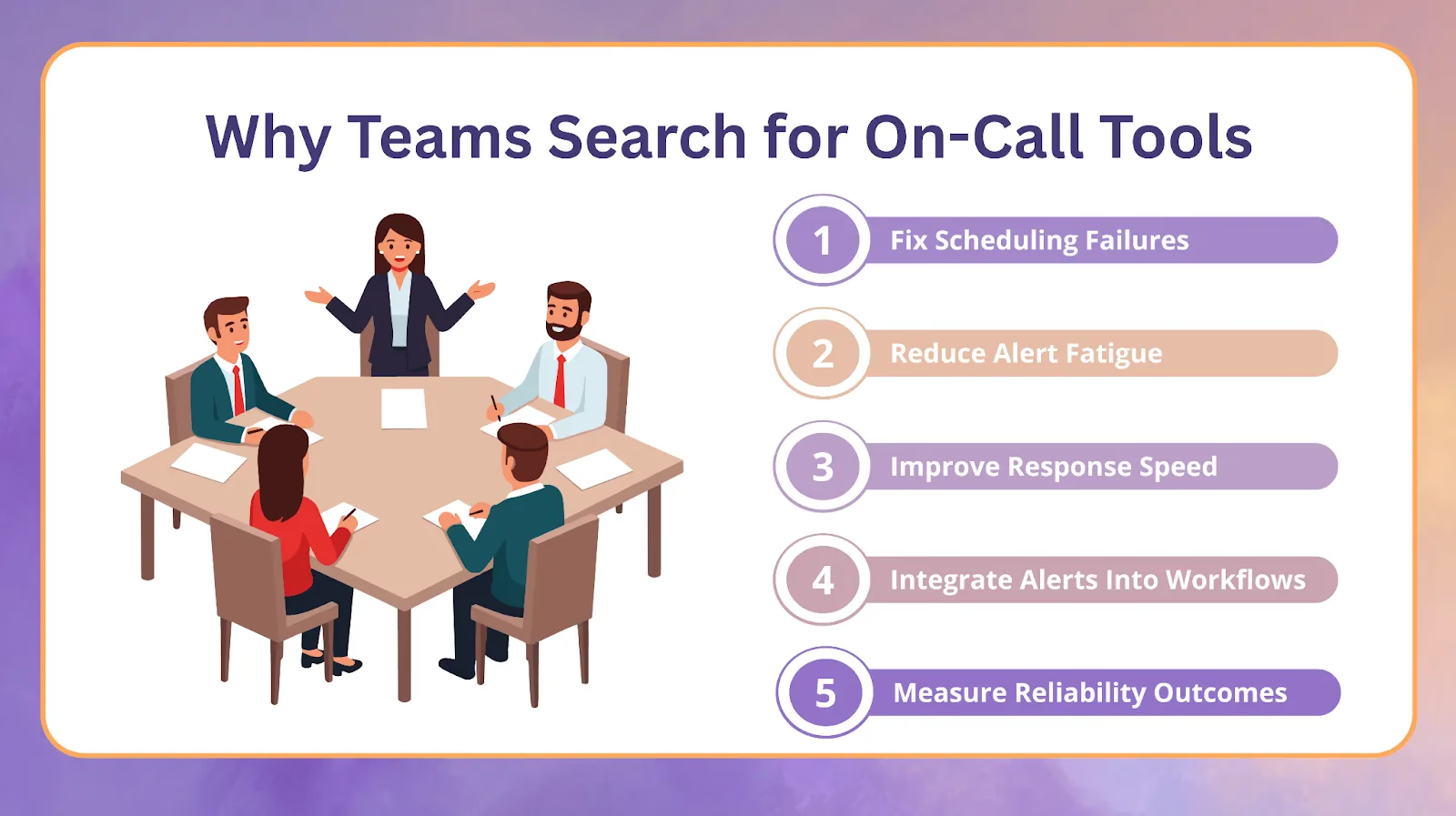
Most teams searching for on-call tools are not comparing features for curiosity. They are reacting to operational pain caused by missed alerts, alert fatigue, slow response times, fragmented tooling, or limited visibility into reliability performance. Understanding these underlying intents helps teams choose tools that solve root problems rather than symptoms.
1. Fix Scheduling Failures
Teams often miss incidents because on-call schedules break down in real-world conditions, such as holidays, shift swaps, or cross-timezone coverage. Broken rotations, manual overrides, and unclear ownership create gaps where alerts go unanswered or escalate too late to prevent customer impact.
2. Reduce Alert Fatigue
Engineers become overwhelmed when tools generate high volumes of low-value alerts that require attention but not action. Over time, this erodes trust in the alerting system, increases response delays, and leads responders to mute notifications or disengage entirely.
3. Improve Response Speed
Delays between detection and responder engagement are a major contributor to extended downtime. When alerts lack clear ownership, escalation logic, or context, valuable minutes are lost determining who should act and what action is required.
4. Integrate Alerts Into Daily Workflows
Teams struggle when alerts live outside their primary tools for communication and issue tracking. Frequent context switching between monitoring dashboards, chat tools, and ticketing systems slows triage, fragments decision-making, and increases the likelihood of miscommunication during incidents.
5.Measure Reliability Outcomes
Engineering leaders and executives increasingly need concrete data to understand operational performance. Metrics such as MTTA, MTTR, alert volume, and repeat incident patterns are essential for identifying systemic weaknesses, prioritizing investments, and improving reliability over time.
Core Capabilities Every Modern On-Call Platform Must Have
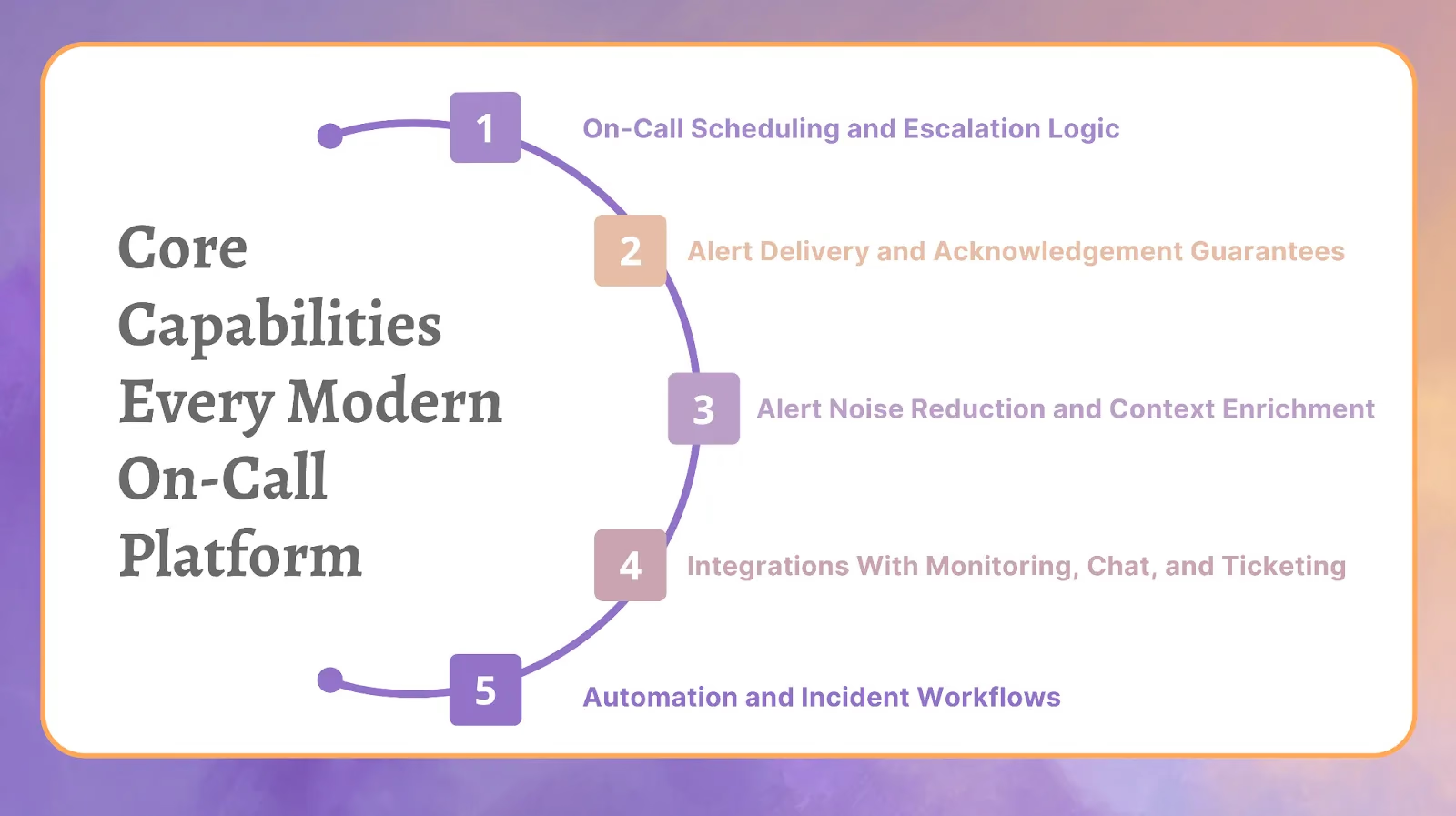
Every effective on-call tool must support flexible scheduling, guaranteed escalation, noise reduction, deep integrations, and automation.
On-Call Scheduling and Escalation Logic
Scheduling must handle rotations, holidays, overrides, and follow-the-sun coverage without manual intervention. Escalation policies are not optional. They are the safety net when the first responder is unavailable.
Alert Delivery and Acknowledgement Guarantees
Email alone is insufficient. Reliable platforms support SMS, voice, push notifications, and repeated escalation until acknowledgement occurs. Delivery confirmation and acknowledgement tracking are essential for legal and operational accountability.
Alert Noise Reduction and Context Enrichment
Modern tools deduplicate alerts, suppress flapping signals, and attach real-time context from observability systems. Responders should see what broke, where, and why before joining a call.
Integrations With Monitoring, Chat, and Ticketing
On-call tools must integrate deeply with platforms like Datadog, Grafana, Slack, and Jira to preserve context and eliminate manual updates.
Automation and Incident Workflows
Automation reduces cognitive load during incidents. Leading platforms automatically create war rooms, notify stakeholders, update status pages, and capture timelines without human prompting.
On-Call Tools vs Incident Management Platforms
On-call tools focus on alerting and scheduling, while incident management platforms orchestrate the entire incident lifecycle.
Teams with low incident volume may only need scheduling and alert delivery. As systems scale, the cost of manual coordination grows. Incident management platforms add structure around communication, decision logging, and post-incident learning. Many teams eventually consolidate both functions into a single system to reduce fragmentation.
How to Choose the Right On-Call Tool for Your Team
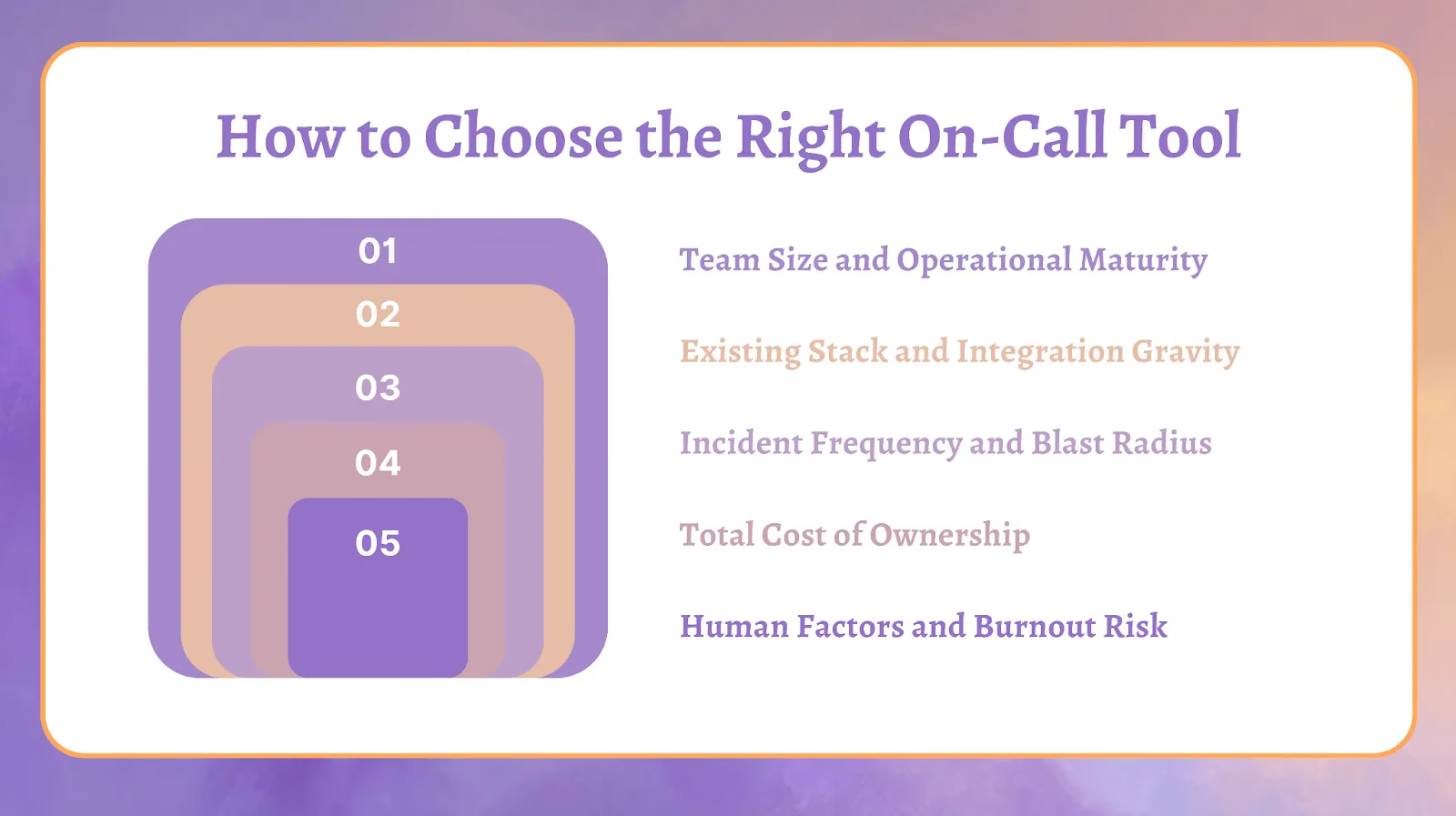
The right on-call tool matches your team’s size, incident frequency, existing stack, and tolerance for operational risk. A strong choice reduces response time and cognitive load while supporting sustainable operations as your systems and team grow.
Team Size and Operational Maturity
Smaller teams benefit from tools that offer fast setup, opinionated defaults, and minimal administrative overhead so engineers can stay focused on delivery rather than configuration. Larger organizations need stronger policy enforcement, audit logs, and analytics to manage handoffs, compliance requirements, and cross-team accountability at scale.
Existing Stack and Integration Gravity
On-call tools should integrate naturally with the systems your team already uses for monitoring, communication, and issue tracking to avoid context loss during incidents. Platforms that require workflow changes or tool migrations often increase friction, slow adoption, and introduce new failure points under pressure.
Incident Frequency and Blast Radius
Teams operating high-availability or customer-facing systems face higher incident frequency and larger blast radii, which justifies investment in automation, structured response workflows, and analytics. Low-frequency incident environments can often start with simpler tooling, but should still plan for growth as system complexity increases.
Total Cost of Ownership
Evaluating total cost of ownership requires looking beyond per-user pricing to include automation limits, required integrations, and the operational effort needed to maintain the tool. As teams scale, platforms with predictable pricing and built-in workflows often cost less over time than tools that rely heavily on manual coordination.
Human Factors and Burnout Risk
On-call tools directly affect team health by shaping alert volume, escalation patterns, and fairness in rotations. Platforms that prioritize noise reduction, predictable schedules, and clear ownership help prevent burnout and support long-term reliability culture.
Common On-Call Tool Mistakes Teams Make
Most failures stem from poor adoption, misaligned tooling, or ignoring post-incident learning.
- Choosing tools based on feature lists instead of workflows
- Under-training responders
- Treating incidents as isolated events rather than learning opportunities
The Future of On-Call Tooling
On-call platforms are evolving into intelligent reliability systems powered by automation and analytics.
AI-assisted triage, automated summaries, and predictive alerting are becoming standard. Reliability metrics are increasingly reviewed at executive and board levels. The boundary between on-call tooling and operational management continues to blur.
Choosing an On-Call Platform That Scales With Your Team
Choose an on-call platform that guarantees alert delivery, integrates deeply with your stack, and supports the full incident lifecycle as your team grows.
In 2026, on-call tooling is not about convenience. It is about resilience. Teams that invest thoughtfully reduce downtime, protect their people, and build systems that recover as well as they run.
On-call tools: Choosing the right platform for your team