 How Prolific outgrew incident.io and built an AI-assisted reliability operating model on Rootly.
 Hannah Hammonds
Similar on the surface, but Rootly pulls ahead on platform maturity, controllable AI, and defaults that hold as you scale. No workarounds required.
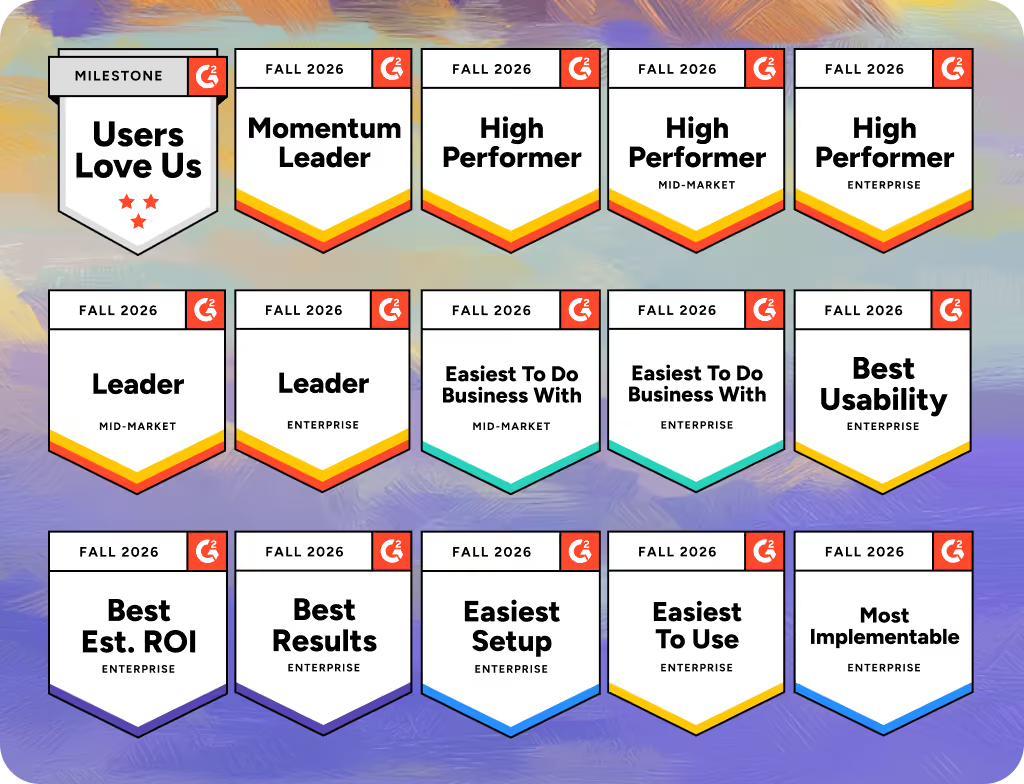
Leading companies that evaluated incident.io and chose Rootly.






















Opinionated defaults come out of the box. As you grow your reliability needs grow with you, but your smart defaults don't have to. Rootly is built to be easy to maintain so you don't feel stuck in a one-size-fits-all tool.

AI agents purpose-built for the on-call and incident space, not a generic LLM. You'll get quick answers with context from all your connected monitoring tools, Slack, Teams, and previous incidents that only exist in Rootly. Plus, custom AI instructions to tailor AI output for your organization's preferences.

So good that even security departments at customers using incident.io still chose Rootly. Designed for the strictest security, governance, and compliance requirements. That’s why the most security-conscious companies in the world—Okta, SailPoint, ZScaler, SoFi—trust and chose Rootly.
Rootly is built to last: profitable, sustainably run and hyper-focused on incident management—we index on longevity. That means transparent pricing on day one, no surprise tax on features you assumed were included, no silly add-on charges, and no discount-now-shock-later renewals.

Every vendor has a migration script. That's the easy part. The hard part is what self-serve misses—the unknown unknowns you only spot after thousands of migrations. Our team of ex-PagerDuty employees handles everything from validating data to training your users. And yes, it's available to customers of all sizes.

No matter how good the tool is, success still comes down to people. We're your partner from day one—no upsell tiers by design, and every team gets a shared Slack channel. Many incident.io users switched to us because they felt like a number and ignored unless they paid for a premium tier. We don't do that.

incident.io got us started, but the moment I tried to mature us past survival mode, it became a ceiling.
As a regulated financial institution, our access-control and governance requirements are the starting line, not a wish list. The more we scaled, the more incident.io leaned on workarounds to fit how we actually operate. Rootly met the governance and RBAC bar natively, so we standardized on it.
Enterprise readiness decided it. As we pressure-tested incident.io against our scale, it became clear how much it would take to operate at our size, and it didn't make our final round. Rootly met our requirements out of the gate.
Security and identity are our business, so we evaluate incident tooling the way our customers evaluate us. What we kept finding with incident.io was that scaling it meant stacking workarounds, and the access-control and governance model still didn't reach where we needed it. Rootly's RBAC and enterprise readiness were built in from day one.

We hit a wall with incident.io the second we wanted to customize anything. And the worst part was there was nobody to talk to about it. Just a higher price and a credit card field. That's a hard way to plan how you're going to grow.
At our scale, enterprise readiness is the first filter. incident.io was ruled out early. We didn't want custom development to keep things working. Rootly cleared that bar from the start, so the decision was straightforward.
Our security team had already put Rootly through its enterprise and access-control review and recommended it. On incident.io, the pattern we saw was complexity growing with scale and a steady need for development to make it fit. Standardizing engineering on the platform security had already vetted was the obvious, lower-risk call.

Our whole product is about being adaptable. We needed an incident system with that same philosophy, one that fits the team we are now and the one we're becoming, without making us rebuild it along the way. incident.io couldn't offer us that. That's a strategic bet on a platform like Rootly.

incident.io got us started, but innovation stalled, and kept putting basic things behind the next pricing tier.
A team of 1 or 10,000+ gets direct access to Rootly experts from day one. That’s a real partnership, not a hands-off tool.
Startups
No incident process? No problem. You don't need to be an expert or build one from scratch. Smart defaults, opinionated best practices, and AI you can control are included for everyone.
What you get
AI across the incident lifecycle that learns your environment and on-call rotations, collaborates with you on Slack, and builds beautiful status pages. Plus, a dedicated CSM at no charge. Set it and forget it.
What you don't get
The feeling of being just a number unless you buy premium support, features gated behind higher tiers.
Growth
You have more services, more dependencies, more on-call rotations—and requirements start changing team by team. Consistency and learning from incidents gets harder.
What you get
Powerful defaults remain the gold standard, but with extensive customization you can fit the tool to your process and culture, not the other way around.
What you don't get
A surprise invoice. A need to build workarounds. A reason to switch.
Enterprises
You're audited now. You have a security team, a procurement process, an on-call pay program wired into payroll. Change management is heavy, requirements keep shifting, and the instinct is to build, not buy.
What you get
Standardization that's easy to maintain at scale, with enterprise controls like advanced RBAC so everyone can adopt it safely. Predictable pricing.
What you don't get
Complexity. A one-size-fits-all tool only works for a few teams. The rest build workarounds, and teams like security get left out. More work arounds and a full-time job managing the tool. A reason to switch.
Any team, any stage, any AI comfort level.
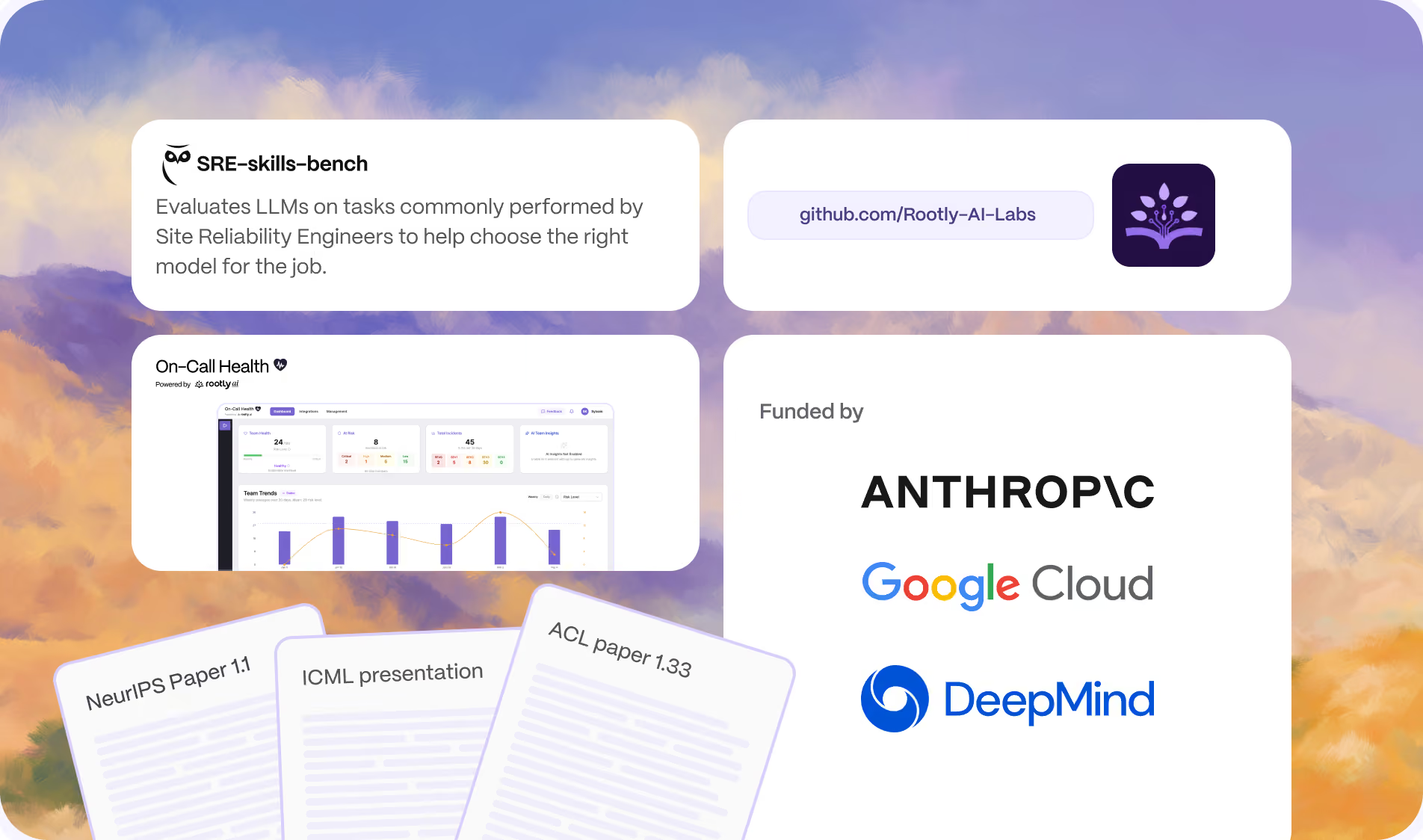
Backed by Rootly AI Labs →A fellow-led community doing deep AI research, with work published at NeurIPS, ACL, ICML, and backed by DeepMind, Anthropic, and Google Cloud.
Fuelled by community →Leading AI companies partner and collaborate to bring insights, ideas, and new ways of working to the community.
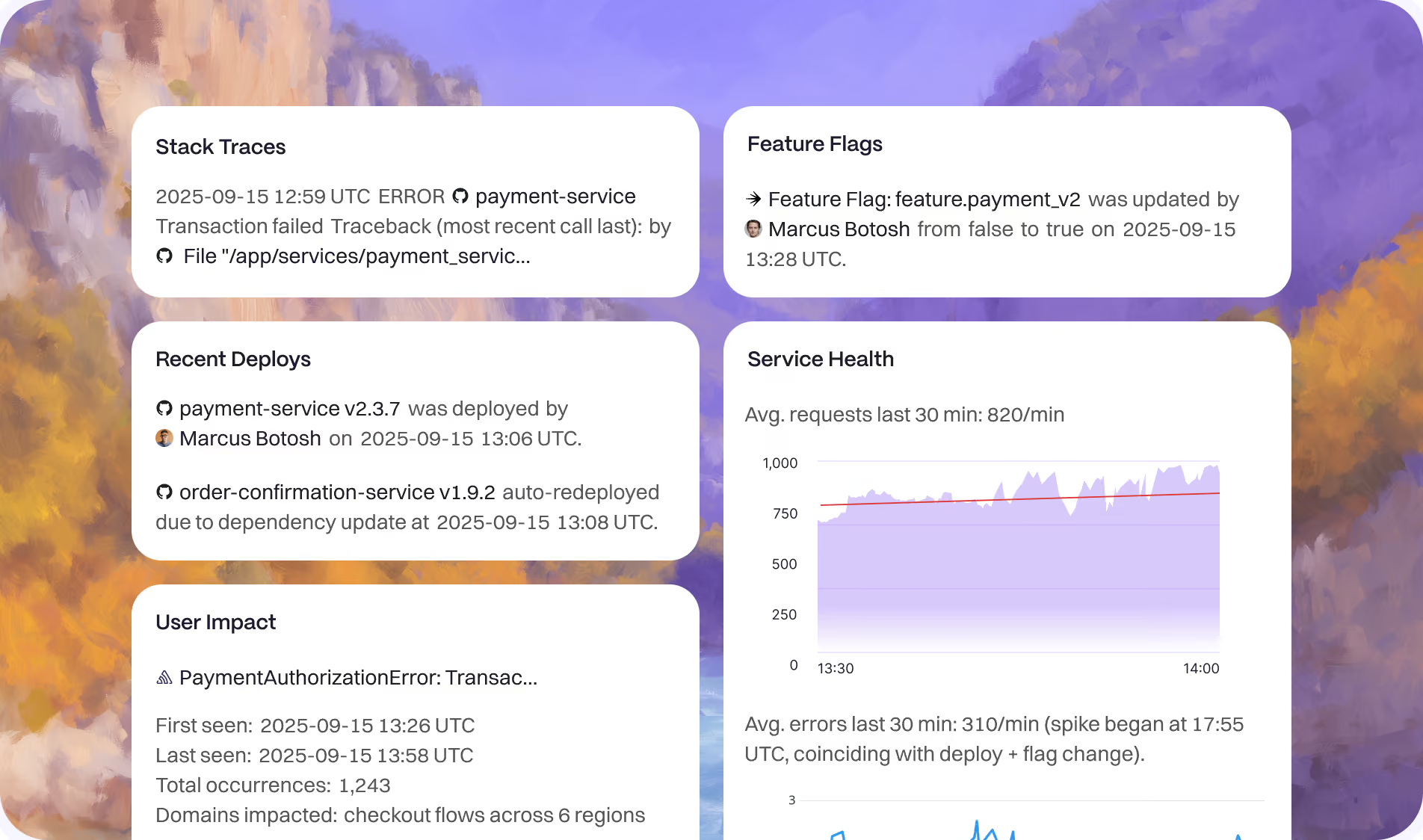
Production-ready →AI investigates everything—your telemetry, past incidents, chats, and PRs—to triage and resolve incidents faster. Available now, not a beta that’s coming soon.
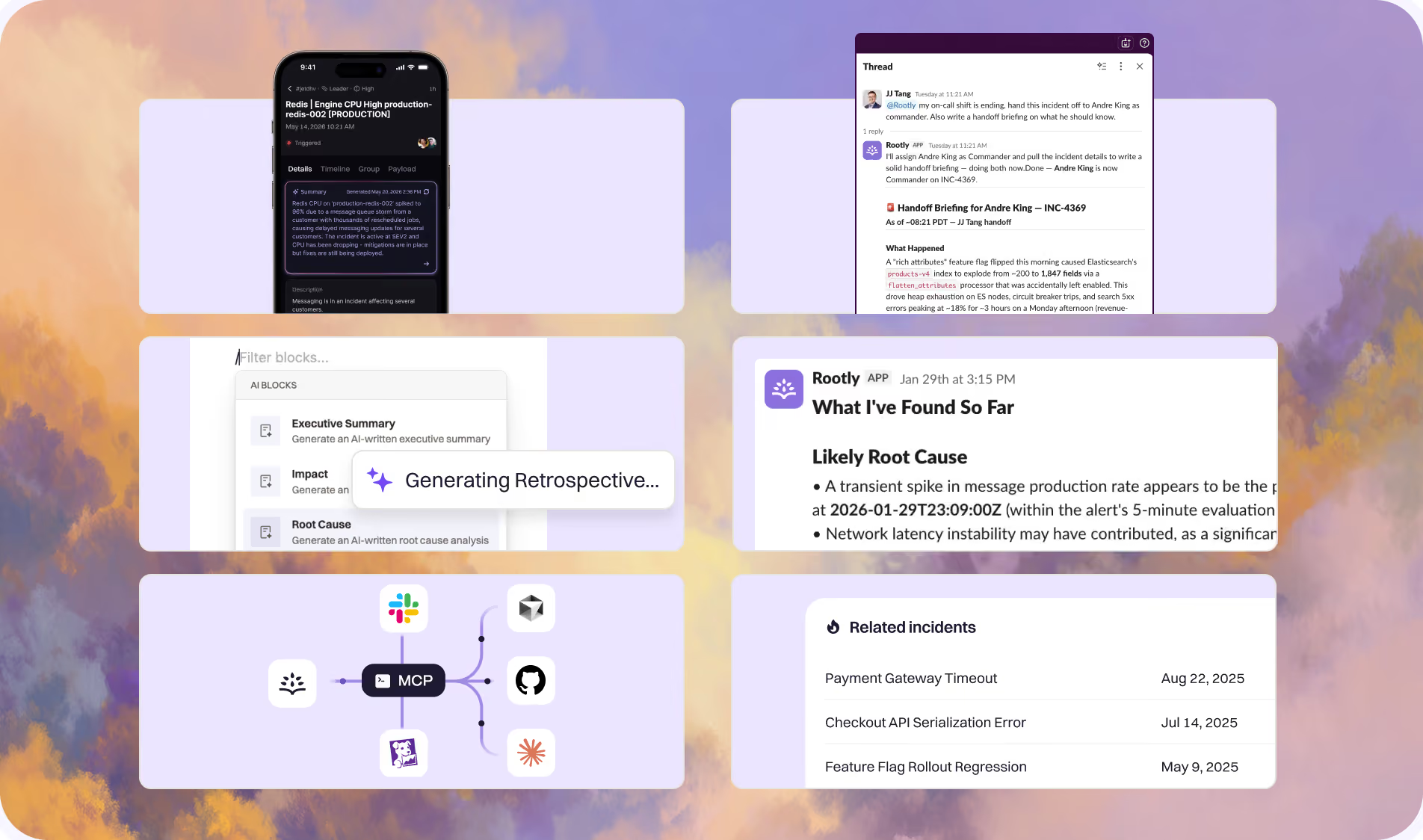
AI depth and maturity →AI agents across your entire incident lifecycle—in Slack, Google Chat, Teams, mobile, and web—investigating, suggesting fixes, plus AI drafting your retropectives with all the context.


| Rapid incident response and resolution | incident.io | Rootly |
|---|---|---|
| Opinionated defaultsSmart defaults and best practices to get you started. | ||
| Predictable pricingPre-negotiated year one, two, and three; no surprise increases on features you thought were included. | ||
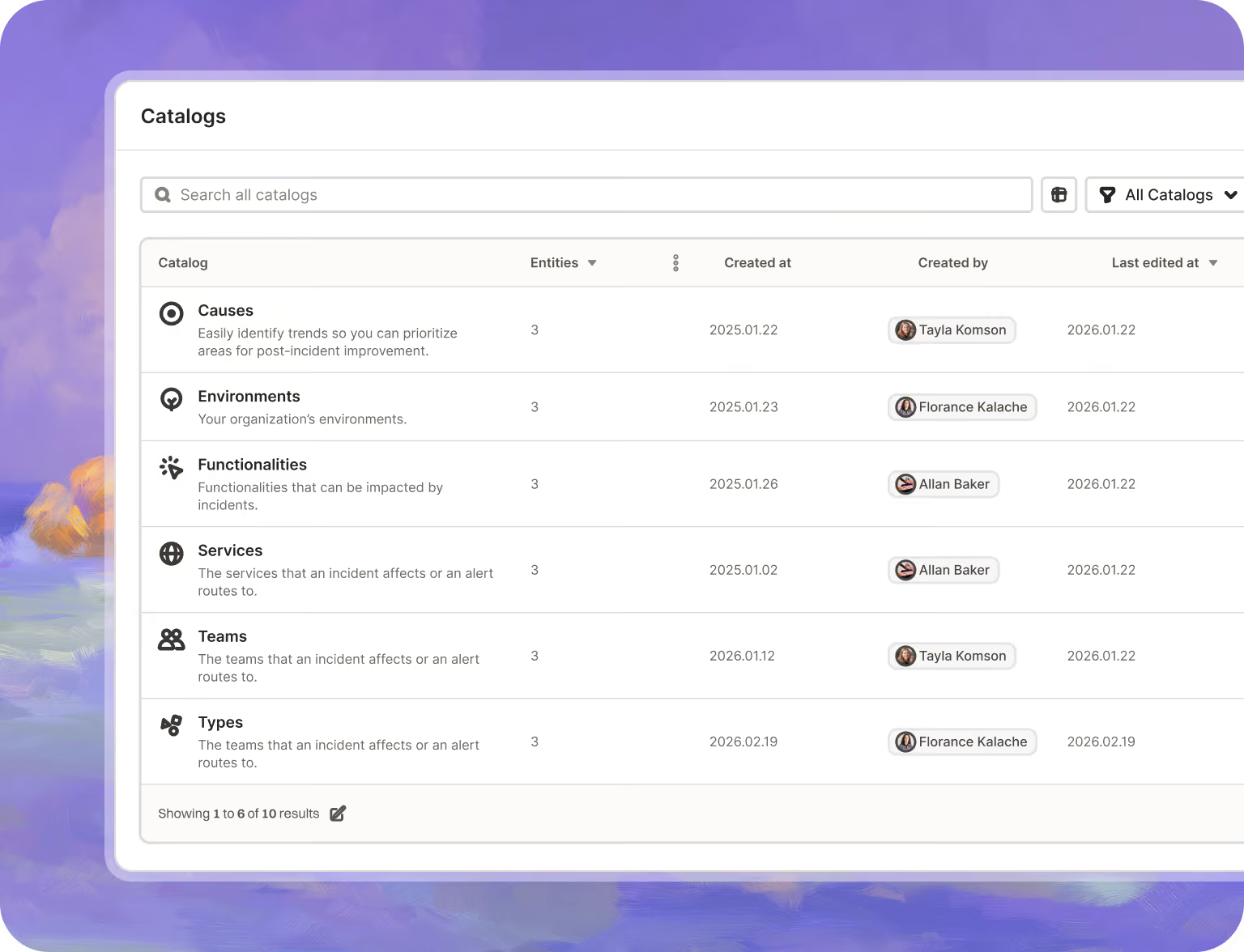
| Native service catalogTeams, services, and ownership modelled once. | ||
| Mobile AINative AI to ask questions about live and historical incidents while on the go. | ||
| Flexible workflowsSmart defaults out of the box, adjustable to your process without code. | ||
| Dedicated customer successNamed CS partner for onboarding and ongoing support. | Paid higher tier | Every single customer |
| On-call schedulingCreate and manage rotation schedules. | ||
| Native shadow rotationsNo extra rotation, no manual cleanup when shadowing ends. | ||
| Simultaneous pagingPage a Team level and Slack channel in one step. | ||
| Mobile appNative mobile app for paging and response. | ||
| Slack-native incident managementRun incidents end-to-end without leaving Slack. | ||
| Single responder status updatesAck, resolve, etc. when any responder acknowledges. | All responders must ack | |
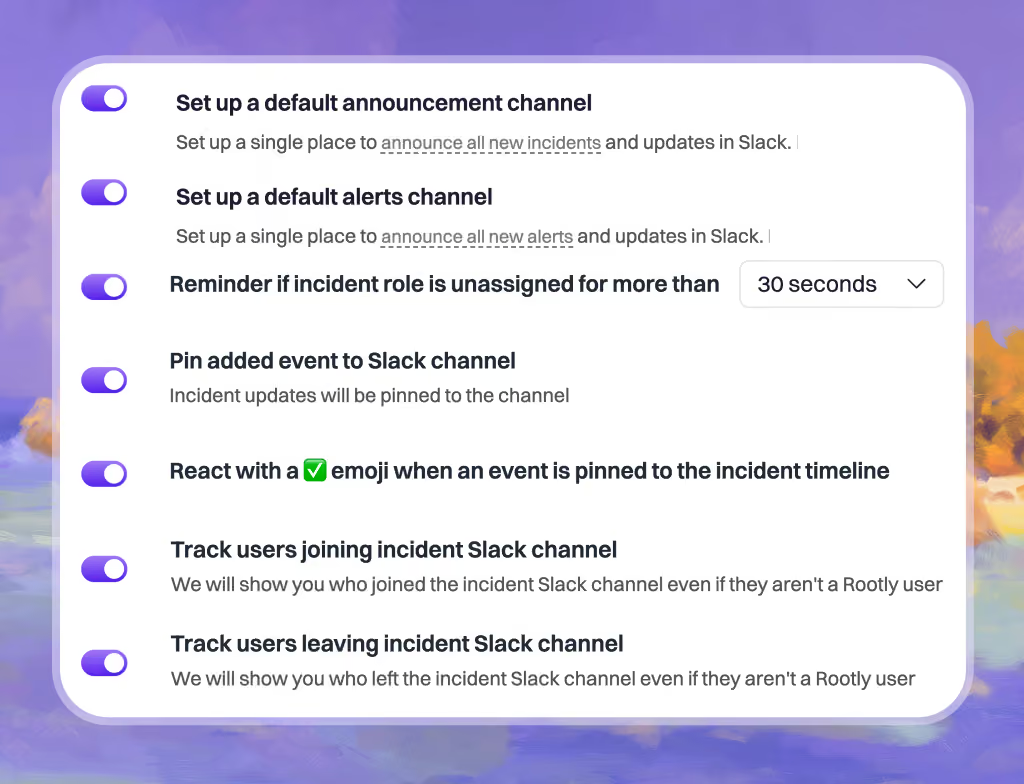
| Automatic role assignmentAssign incident commander, comms lead, etc. automatically. | ||
| Automated stakeholder updatesStructure communications sent automatically. | ||
| MS Teams-native incident managementRun incidents end-to-end without leaving MS Teams. | ||
| Status PagesCustomer-facing status updates tied to the incident. | ||
| Delayed workflow executionFire a workflow, wait, fire again logic. | ||
| Conditional branching and cross-tool triggersWorkflows can branch on conditions and reach across tools. | ||
| Config maintenance overheadHow much effort to maintain as your org scales. | Low at first, workarounds at scale | Low - abstracted logic, flexible workflows |
| AI summariesAuto-generate incident summaries. | ||
| AI agent on the web appAsk questions about live and historical incidents. | ||
| AI Retrospectives with transparent blocksAuto-generate retrospectives with transparent AI building blocks that allow you to edit prompts. | AI retros, no transparent blocks | |
| AI agent in Slack, Teams, Google ChatAsk questions about live and historical incidents. | ||
| MCP ServerMCP server to connect AI IDEs. | ||
| AI InstructionsCustom instructions to tailor AI output. | ||
| AI SRE (AI investigations)AI that automates root cause analysis and suggests fixes. | ||
| Native alert integrationsDatadog, Grafana, Prometheus, Honeycomb, etc. | ||
| SSO / SAMLSingle sign-on via SAML. | ||
| SCIM provisioningAutomatic user provisioning and de-provisioning. | ||
| Edge connectorOutbound agent for internal systems that cannot accept inbound internet connections. | ||
| Audit loggingTrack changes and actions across the platform. | ||
| Contractual SLAGuaranteed uptime commitment. | up to 99.99% | up to 99.99% |
 How Prolific outgrew incident.io and built an AI-assisted reliability operating model on Rootly.Hannah HammondsHow Reactiv outgrew incident.io and moved to Rootly for real AI and on-call without the upsell.
 Michael PezziWhy Capa replaced incident.io with Rootly.
 Juan David TorresWhy CTSO Central chose Rootly over incident.io.
 Alex Mellott
Everything you need to know about Rootly vs. incident.io.
Rootly and incident.io are both reliability platforms that cover on-call, incident response, status pages, retrospectives, and AI triage and investigation. The key differences are support, AI control and transparency, and economics at scale. Rootly offers deeper RBAC and workflow customization with no workflow limits, full feature access on every plan regardless of team size, a dedicated AI research division (Rootly AI Labs) backed by Google DeepMind and Anthropic, and direct access to Rootly employees. Rootly wins when organizations need enterprise-grade control, predictable pricing, workflows that work the way you need, and AI that goes deeper across the platform.
Rootly is purpose-built for the complexity enterprise engineering organizations face — granular RBAC across roles, services, teams, severities, and components; private incidents invisible to the rest of the org by default; just-in-time access controls; and isolated tenant support for security teams. incident.io's RBAC is more limited and its workflows are not flexible, which works for smaller teams at first but creates friction as organizations scale. Enterprise teams consistently choose Rootly when governance, compliance, and operational complexity are non-negotiable.
Rootly is a profitable business with transparent, predictable pricing. Every major feature is available on every plan regardless of team size—no gated capabilities, no surprise add-ons. incident.io customers consistently report sticker shock at renewal—lower prices in year one followed by significant increases in year two. For organizations planning multi-year reliability investments, Rootly’s pricing model is structurally more predictable.
Rootly AI SRE is built on a historical corpus of hundreds of thousands of real incidents, and runs parallel hypothesis checks per incident. It's built with an underlying harness and purpose-built tools; the shared context layer every Rootly AI feature reads from: your connected tools, a service graph built from them, and learnings it records over time, including notes you provide. Every finding includes a confidence score and a visible reasoning chain—engineers see exactly how the AI reached its conclusion before acting on it. Rootly AI also works across the full incident lifecycle: investigation, stakeholder updates, call transcription, action item tracking, and retrospective generation. Rootly AI SRE is also backed by Rootly AI Labs, a dedicated research division funded and mentored by Google DeepMind, Anthropic, and Google Cloud — with research published at NeurIPS, ACL, and ICML.
Yes. Rootly Catalog connects services, teams, runbooks, and dependencies directly to every incident—powering alert routing, workflow automation, AI investigation, and retrospective reporting from a single ownership model. Unlike incident.io's Catalog, Rootly's is designed to reflect your org's terminology and structure without imposing a rigid data model. It syncs from existing tools like Cortex and Backstage, and activates immediately across the entire platform.
Rootly On-Call supports native shadow rotations, simultaneous paging to a level and Slack channel in one step, and resolves incidents when any responder acknowledges—so MTTR metrics stay accurate even when someone misses a page. incident.io requires workarounds for shadow schedules, cannot natively page a level and Slack channel simultaneously, and requires all paged responders to acknowledge before an incident resolves—meaning one missed page leaves the incident perpetually unresolved and corrupts MTTR data.
Customers who move from incident.io to Rootly most commonly cite the following reasons: incident.io's workflows are too rigid and can't be adjusted; AI output quality degrades at scale with more false positives than useful findings; pricing increases significantly at renewal; verbose information in Slack that renders notification unusable; lack of RBAC depth and control. Rootly's mobile app and UX; workflows, deeper RBAC, AI quality, and predictable pricing are the most frequently cited reasons for switching.
Yes. Rootly is fully native with Slack, Google Chat, and Microsoft Teams—incidents can be declared, managed, and resolved entirely within each platform. Stakeholder updates, workflow automations, AI investigation, and on-call notifications all flow through the communication tool your team already uses.
Rootly is invested in the reliability community beyond the product—offering the industry's only incident simulation training, Rootly Academy, and open source projects from Rootly AI Labs including oncallhealth.ai and SRE-bench. Rootly AI Lab is a dedicated research division that publishes at NeurIPS, ACL, and ICML, and is funded by Google DeepMind, Anthropic, and Google Cloud. This level of community investment and published research has no equivalent at incident.io.