incident-response-google-chat
startups
incident-response-microsoft-teams
home
rootly-vs-jira-service-management
rootly-vs-pagerduty
rootly-vs-opsgenie
humans-of-reliability
retrospectives
integrations
incident-response-slack
on-call
ai-sre
pricing
customers
Download PNG
Download SVG
Sync your catalog, and mute pages during Alert storms.
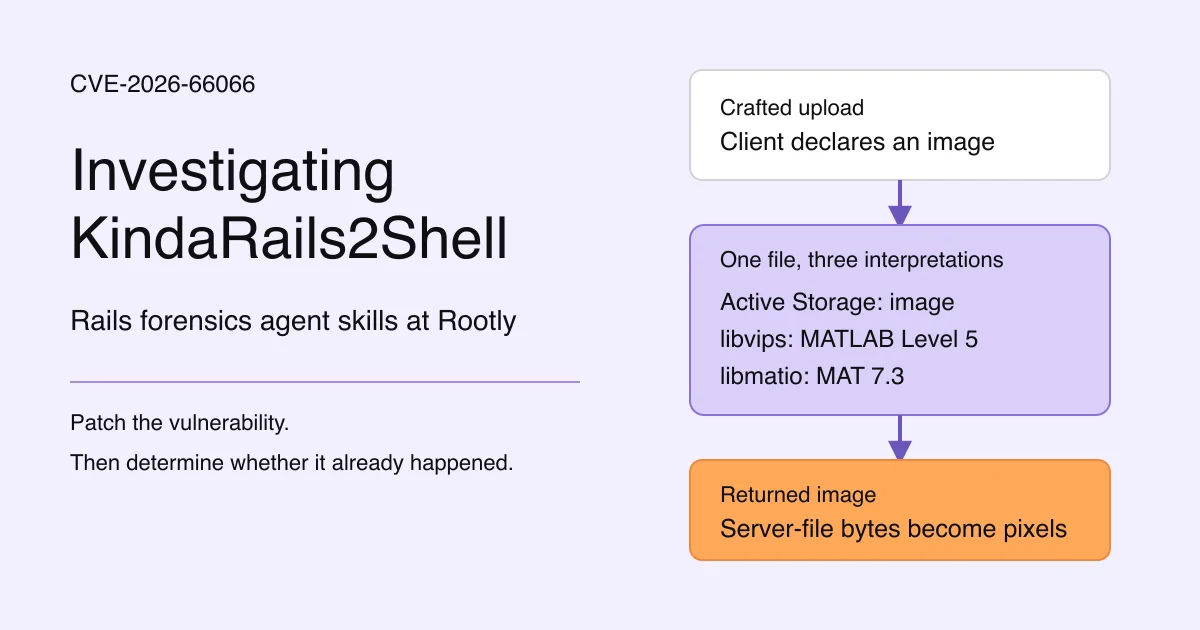
Investigating CVE-2026-66066 with the Rails Forensics Agent Skills
Six tips on how Site Reliability Engineers (SREs) can prepare for the reliability challenges of Black Friday and Cyber Monday 2021
Quentin Rousseau
Follow these steps to write a great SRE job resume.
SREs and SWEs complement each other, but they perform different tasks and focus on different priorities.
A comparison of EKS, AKS, GKE, Rancher and OpenShift from an SRE’s perspective.
The four key takeaways for SREs from Google’s State of DevOps 2021 report
Although conversation about observability often ignores SREs, SREs have a central role to play in observability success.
A look at outages and disruptions to the IT systems that power the Olympics, from 1996 to today.
It's time to break down the silos separating SREs from security engineers.
Rootly is on a mission to create a world where maintaining reliability is frictionless, delightful, and accessible to anyone. Making resolving and learning from incidents every organizations superpower.
From chaos engineering to monitoring and beyond, SREs rely on several key types of tools to do their jobs.
What are the differences between incident management and incident response? The answer varies widely depending on whom you ask.
Service Level Objectives (SLOs) are a key component of any successful Site Reliability Engineering initiative. The question is, what are SLOs; and how do you determine what your SLOs should be? Once you've done that, how should you use them?










.svg)