In focus
Write it down, replay it, ship it: why we build ERDs to build product
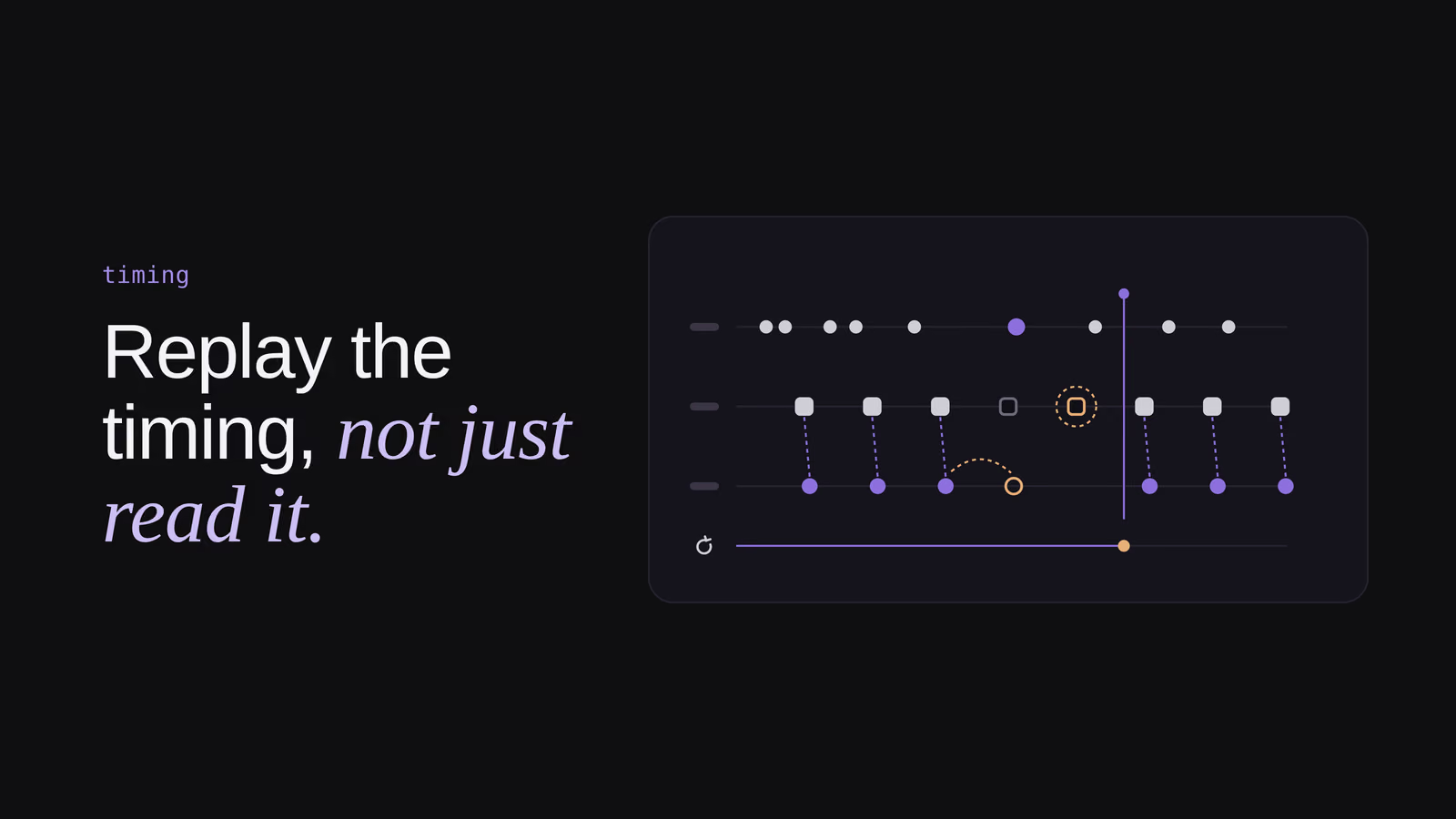
How Rootly wrote its proactive incident agent ERD as an interactive page with replay buttons, a clickable Slack approval card and a code map for reviewers.

Perspectives on AI, engineering, and the humans keeping systems running.
In focus
How Rootly wrote its proactive incident agent ERD as an interactive page with replay buttons, a clickable Slack approval card and a code map for reviewers.
An attack file was uploaded.
The crafted file was processed.
Evidence of which bytes were returned.
How Rootly investigated CVE-2026-66066, an Active Storage flaw in Rails, using Claude and forensics agent skills to scan for exposure and check logs.

Why Rootly pays engineers up to $25k for finding and shipping infrastructure cost savings, and how ECR lifecycle policies saved roughly $44K a year.
Small PRs are great for humans, but not for AIs. Instead of focusing on diff size, we moved ot a risk-based model.
What broke at Rootly after engineering went fully agent-based: each engineer ran several coding agents, and fragmentation grew fast. Lessons on shared tooling.

In a typical week, our team ships four or five features. Sometimes more. Testing all of them at that pace, with humans, isn't really realistic.

AI's failure mode has changed. Most incidents aren't code bugs: they're context bugs. And faster review can't catch them. A case for rollback.
On extending a high-volume production pipeline instead of building alongside it, and the edge cases that only appear at the intersection of correct decisions

Instead of writing code, lot of the work I do is providing context to the agents so I can, hopefully, come back to them having completed a bunch of tickets.

A dive into how we built collaborative software with real-time features, AI assistance, and workflow automation with Y.js CRDTs).

How Mistral AI's SRE team uses Terraform as the source of truth for alerting, keeping checks, routing and pager noise consistent as AI systems change.
Why Rootly builds small standalone design playgrounds to test new components like forms, so teams decide from real interactions rather than opinions.

Discover IncidentDiagram, an open-source CLI tool that uses LLMs to turn incident retrospectives and codebases into easy-to-understand visual diagrams.

Page 1 of 2 · 16 articles