
Report
How to achieve great incident management
What does reliable software look like in the age of AI? We analyzed 350,000 recent incidents to understand how top-performing teams handle incidents.
Practical knowledge for the humans building more reliable systems.
Report
What does reliable software look like in the age of AI? We analyzed 350,000 recent incidents to understand how top-performing teams handle incidents.
Guide
Incident response works best as a practiced system: clear roles, shared priorities, reliable communication, and a process that improves after every incident.
Start with the overviewA dependable response process gives SRE teams a shared path from the first alert through recovery and review, even when the incident itself is unfamiliar.
Clear roles keep responders from colliding under pressure. Give technical work, communication, documentation and leadership an owner, with matching workflows.
Runbooks turn known failure modes into executable steps, but they only earn trust when they are easy to find, safe to follow, and kept current.
How to measure MTTR accurately: formulas for MTTD, MTTA, MTTM and MTTR, a worked mean vs median example, and the pitfalls that skew incident metrics.
Guide
Learn how AI SRE agents investigate incidents, analyze likely root causes, and support remediation. Explore capabilities, limitations, and adoption steps.
Start with the overviewAn AI agent can have the right code and the wrong context. See how AI SRE architecture connects evidence, policy, execution, verification, and rollback.
A successful AI SRE rollout builds trust in stages, beginning with better incident context and introducing controlled action only when the workflow is ready.
AI SRE vs AIOps compared on eight axes: what each does, when it acts and how it is measured, plus how they work together and which to start with.
The value of AI SRE appears first in faster context, safer actions, and less on-call toil, not necessarily in a dramatic change to MTTR.

Upcoming webinar
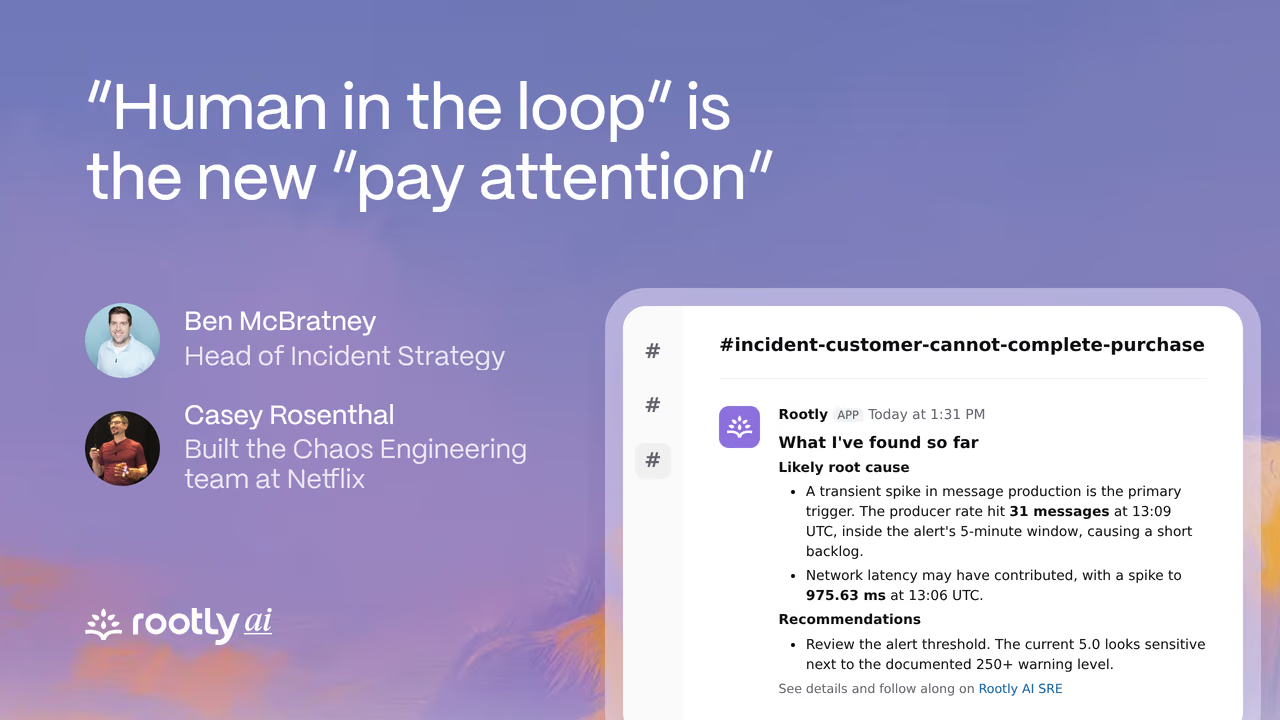
Upcoming webinar

Upcoming webinar
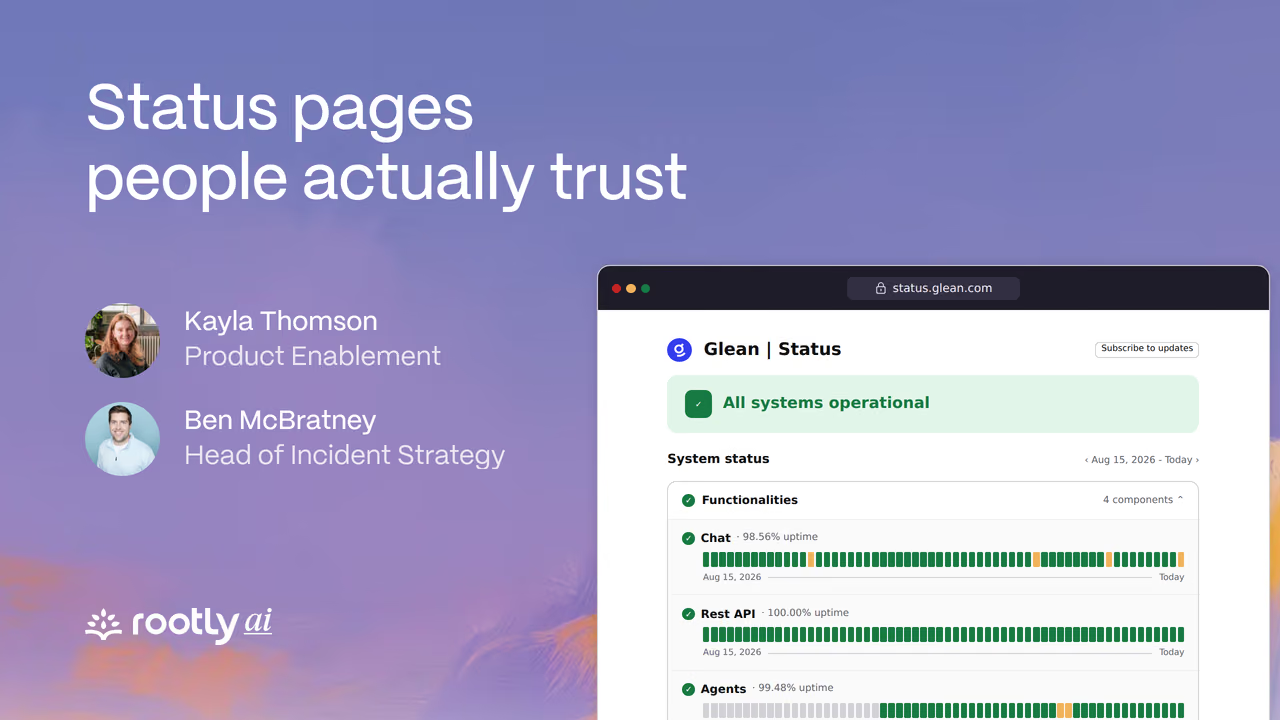
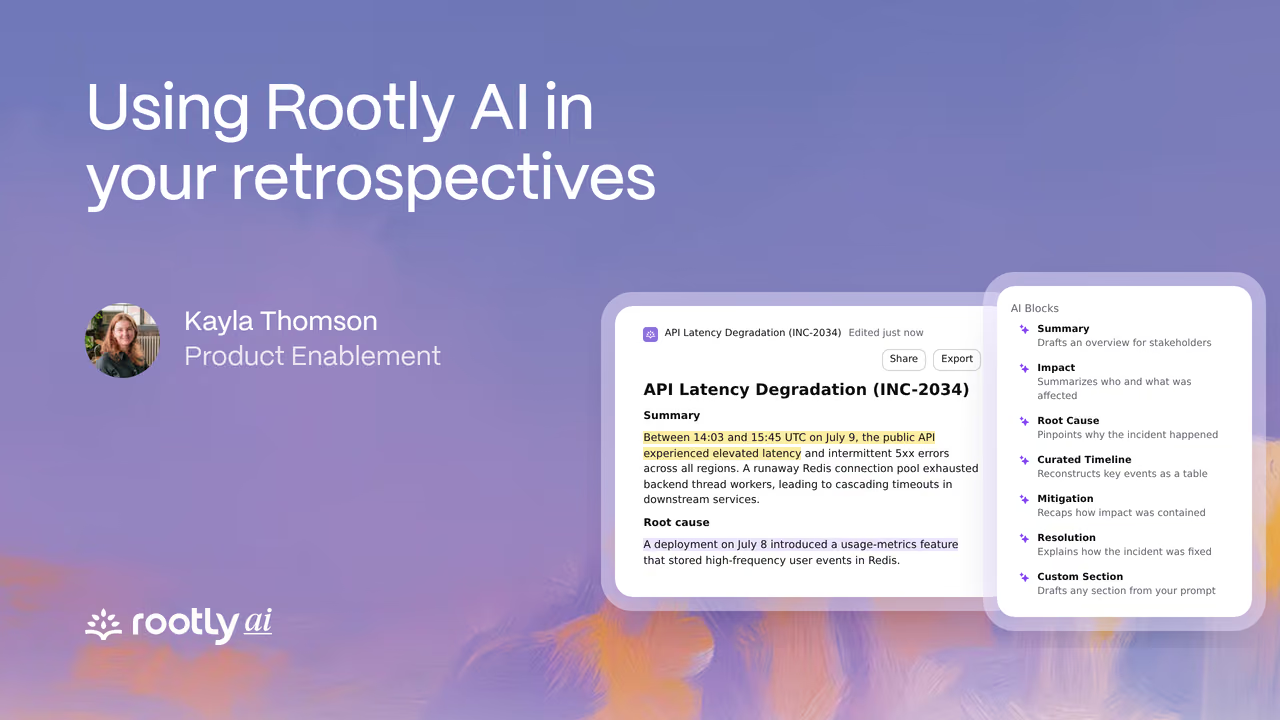
Guide
A good postmortem turns one incident into better systems, clearer ownership, and fewer repeat failures by helping the team understand what really happened.
Start with the overviewA reliable timeline replaces conflicting memories with a shared sequence of events, making delays, decisions, and missed signals easier to understand.
How engineering teams run root cause analysis on production incidents: methods that work, turning contributing factors into owned fixes, and preventing repeats.
How to run a post-incident review meeting: roles, a 60-minute agenda, blameless facilitation questions and how to make sure action items get finished.
Why post-incident action items stall after the retrospective, and the five rules, review cadence and follow-through metrics that get them finished and verified.
Guide
What to look for in on-call software: who owns an alert, who gets paged, and what happens when nobody answers the first page.
Start with the overviewA well-designed rotation makes coverage predictable and recovery possible; a poor one turns reliability into an uneven tax on the same few engineers.
On-call compensation works when it reflects the real burden of readiness and gives teams a transparent way to account for time, disruption, and workload.
Alert fatigue begins when every signal demands attention, leaving responders slower to recognize the few notifications that truly require action.
Escalation should remove uncertainty during an incident by making it clear who responds first, when backup joins, and how coverage is maintained.

Report
An opinionated benchmark built on a sample of Rootly data, 350K+ incidents at 650+ companies: on-call, paging, mitigation, updates, retrospectives and AI.
Upcoming webinar
Upcoming webinar
Upcoming webinar
Guide
Learn how AI SRE agents investigate incidents, analyze likely root causes, and support remediation. Explore capabilities, limitations, and adoption steps.
Guide
What to look for in on-call software: who owns an alert, who gets paged, and what happens when nobody answers the first page.
Guide
Incident response works best as a practiced system: clear roles, shared priorities, reliable communication, and a process that improves after every incident.
Guide
A good communication plan keeps responders aligned and gives customers, leaders, and partners useful updates without distracting the people working on the fix.
Guide
A good postmortem turns one incident into better systems, clearer ownership, and fewer repeat failures by helping the team understand what really happened.
Guide
A practical guide to turning telemetry into actionable, owned alerts through better routing, escalation, automation, and AI-assisted triage.
Guide
The switching guide: what changed for teams who moved, how Rootly compares, how to run a pilot, how a migration runs, and how to make the case inside your company.
Report
This guide covers everything you need to know about DORA compliance, including deadlines, penalties, and a step-by-step checklist to meet the new EU regulation.
No resources or chapters match your search.
Resources couldn’t be loaded.