

Modern engineering environments generate thousands of alerts every day. Monitoring platforms continuously watch applications, infrastructure, databases, cloud services, and networks for signs of performance degradation or failure. However, detecting a problem is only the first step. An alert has little value if it does not reach the person who can resolve it.
Alert routing is the process of automatically directing alerts to the appropriate responder, team, or service based on predefined rules.
Effective routing helps production issues reach the engineers responsible for the affected systems, reducing response delays, unnecessary notifications, and confusion around ownership.
As organizations adopt cloud-native infrastructure, automation, and AI SRE practices, routing decisions become more complex. By combining service ownership, on-call schedules, severity levels, operational context, and collaboration tools such as Slack, modern alert management systems can deliver each alert to the right responder faster and more consistently.
What is alert routing?
Alert routing is the process of evaluating an incoming alert against predefined routing rules to determine who should receive the notification. Instead of sending every alert to every engineer, routing systems automatically identify the appropriate individual or team based on information about the affected service, environment, ownership, severity, or schedule.
A simplified routing workflow looks like this:
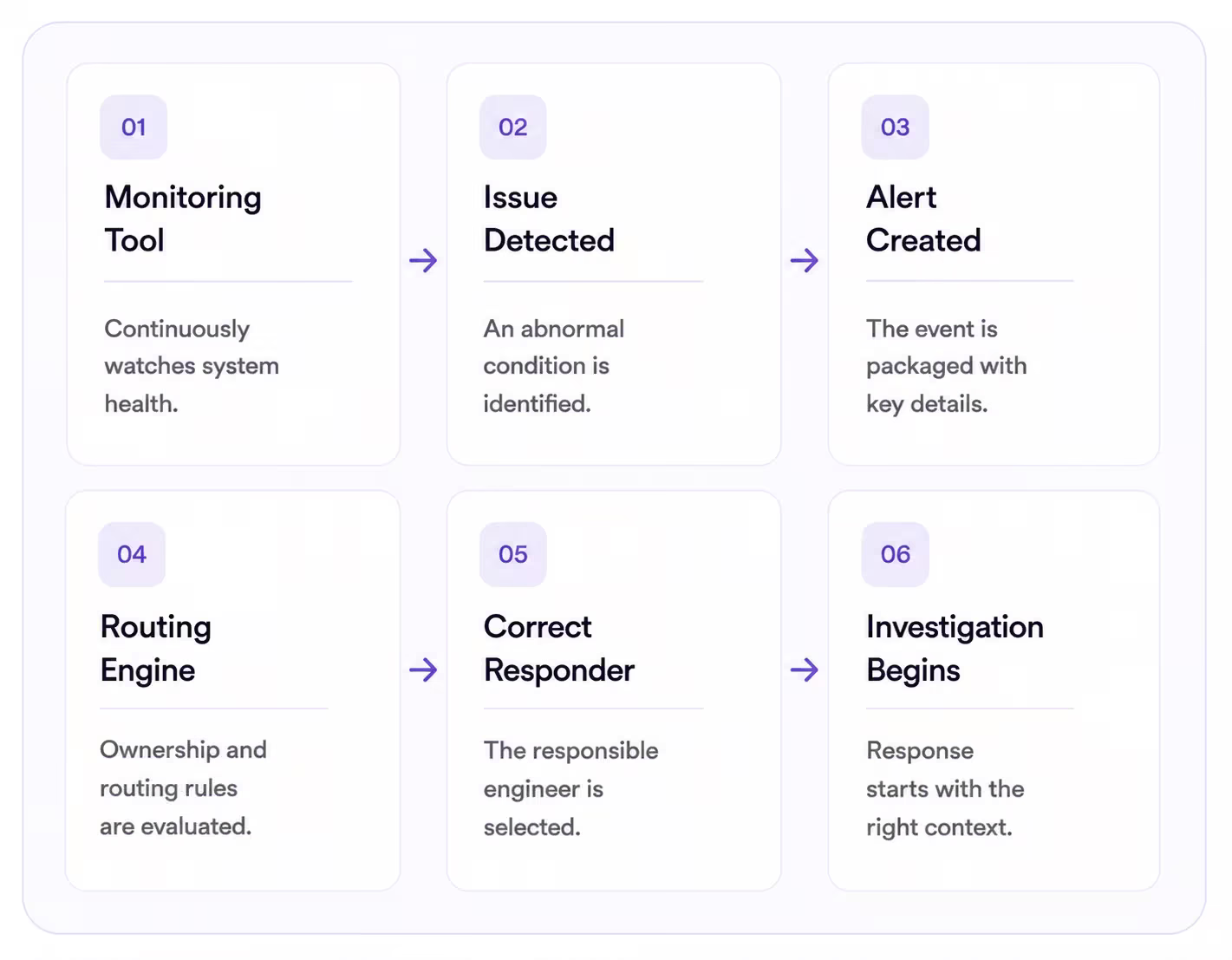
Every alert carries information that helps determine where it should go. This may include:
- The affected application or service
- Infrastructure component
- Environment (production, staging, development)
- Alert severity
- Cloud region
- Customer or tenant
- Monitoring source
- Tags or metadata
The routing engine evaluates this information against predefined policies to determine the correct destination.
For example, if a monitoring platform detects elevated Application Programming Interface (API) latency in the payments service, the routing engine can immediately notify the Payments team’s on-call engineer instead of broadcasting the alert across the entire engineering organization.
This targeted approach allows teams to respond more efficiently while avoiding unnecessary interruptions for engineers who are not responsible for the affected system.
It’s also important to distinguish alert routing from alert escalation. Routing determines who receives an alert first, while escalation determines what happens if the alert is not acknowledged within a defined timeframe. Together, routing and escalation ensure alerts reach the right people and continue progressing until someone takes ownership.
Why alert routing matters
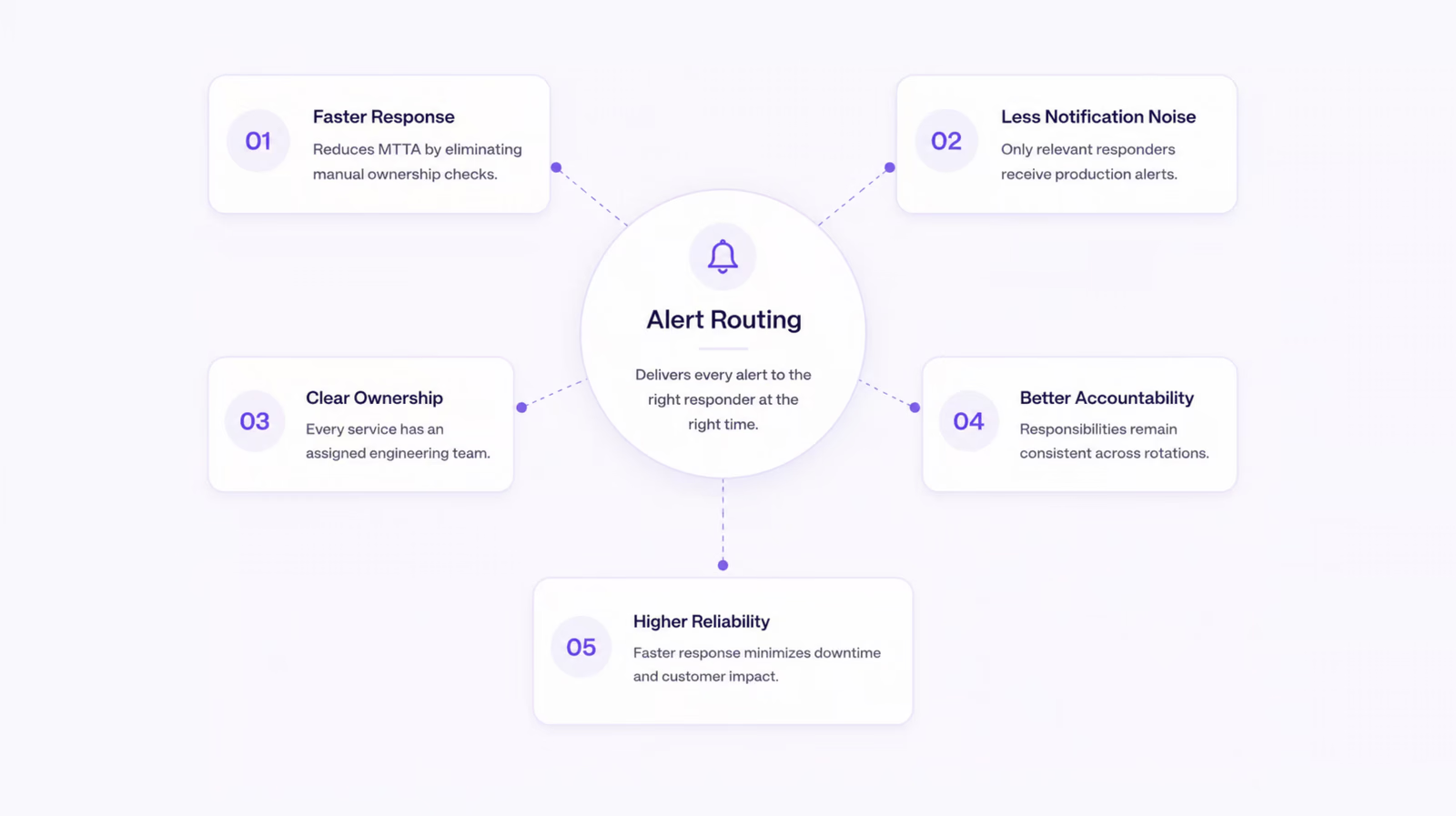
Routing alerts correctly has a direct impact on the speed and effectiveness of incident response. Even highly accurate alerts lose value if they reach the wrong responders or spend valuable minutes being forwarded between teams.
Effective alert routing creates operational clarity by ensuring every alert has a clear destination from the moment it is generated.
Faster incident response
Every minute spent identifying the correct responder increases the time required to investigate and resolve an issue.
With well-designed routing policies, alerts immediately reach engineers who understand the affected systems, allowing them to begin diagnosis without unnecessary delays.
Instead of asking:
“Who owns this service?”
Teams can immediately focus on:
“How do we fix it?”
Reducing this handoff process helps organizations shorten Mean Time to Acknowledge (MTTA) and supports faster incident resolution.
Reduced unnecessary notifications
One of the biggest causes of operational inefficiency is sending alerts to people who cannot act on them.
When every engineer receives every notification, important alerts become difficult to distinguish from routine operational events. Engineers begin ignoring notifications because most do not require their attention.
Targeted routing limits notifications to the individuals or teams responsible for the affected systems, improving focus and reducing unnecessary interruptions.
Clear service ownership
Modern applications are built from hundreds of interconnected services maintained by different teams.
Alert routing reinforces ownership by ensuring every production service has a defined responder.
Examples include:
- Payments → Payments Engineering
- Authentication → Identity Team
- Search → Platform Search
- Kubernetes Infrastructure → Infrastructure Engineering
- Database Cluster → Database Operations
This ownership model eliminates confusion during incidents and provides accountability for operational health.
Better team accountability
Clear routing policies make operational responsibilities transparent.
Every team understands:
- Which services they own
- Which alerts they receive
- When they are responsible
- How alerts are delivered
- How responsibilities change during on-call rotations
This consistency improves collaboration and reduces uncertainty during high-pressure incidents.
Improved customer reliability
When production issues reach the appropriate responders immediately, organizations can restore service faster and reduce customer impact.
Reliable routing minimizes the time between detection and investigation, helping engineering teams resolve incidents before they escalate into larger outages.
How alert routing works
Although routing rules vary between organizations, most modern alert management platforms follow a similar workflow from detection to notification. The process uses alert metadata, predefined routing rules, service ownership, and on-call schedules to direct each alert to the appropriate responder.
1. Monitoring Detects an Issue
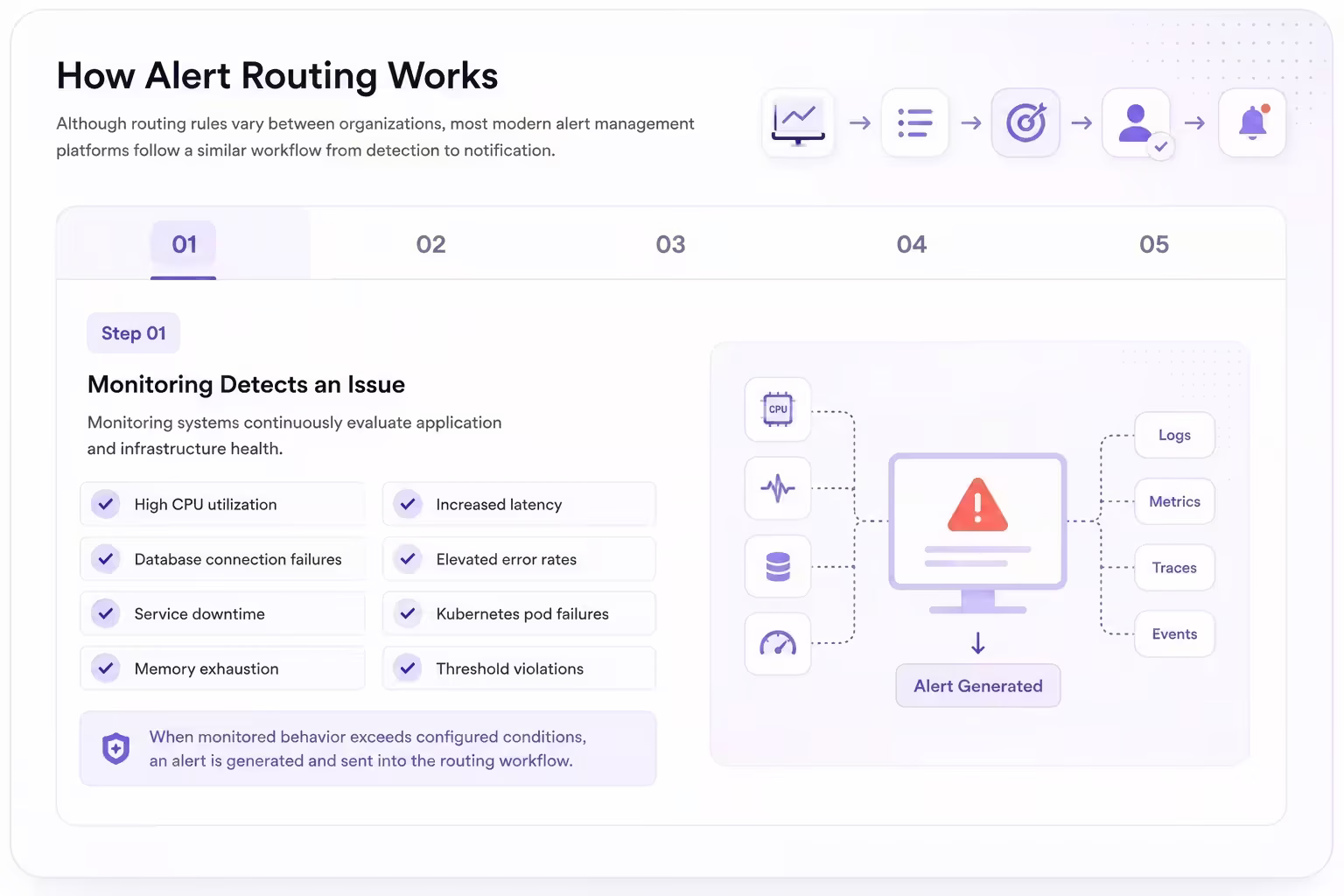
The workflow begins when a monitoring or observability system identifies abnormal behavior across an application or its supporting infrastructure. Signals may come from metrics, logs, traces, events, or health checks.
Common alert conditions include:
- High CPU or memory utilization
- Increased application latency
- Database connection failures
- Elevated error rates
- Service downtime
- Kubernetes pod failures
- Health-check failures
- Configured threshold violations
When monitored behavior meets a configured condition, the system generates an alert and sends it into the routing workflow.
2. The Alert Enters the Routing Engine
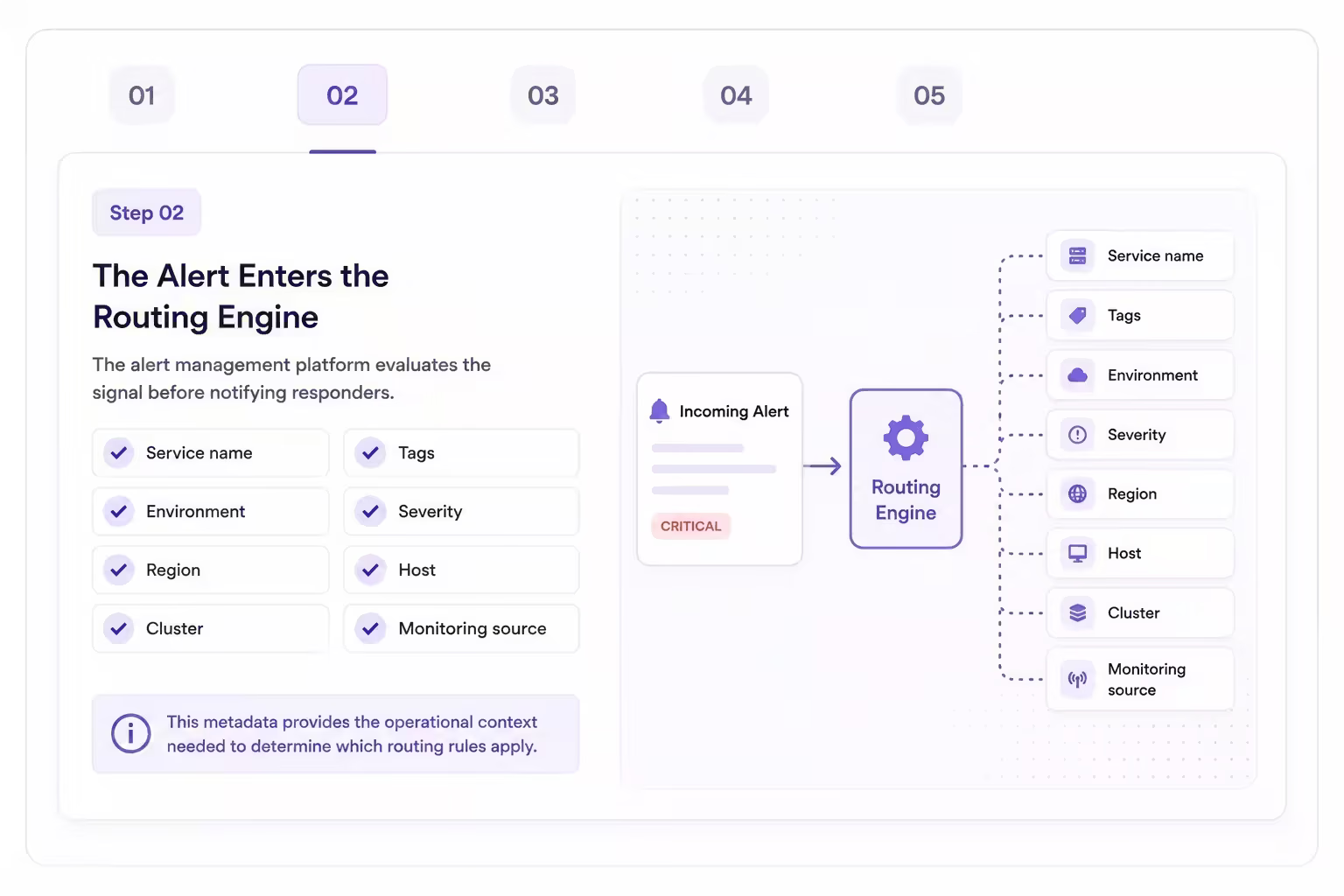
The alert is sent to the alert management platform, where the routing engine examines its metadata. This context helps the platform understand what is affected and determine which routing rules apply.
The routing engine may evaluate:
- Service name
- Environment
- Severity
- Region
- Host or cluster
- Alert tags
- Monitoring source
- Other custom attributes
For example, identifying an alert as a critical production issue affecting the payments service allows the platform to distinguish it from a lower-priority issue in a development environment.
3. Routing Rules Are Evaluated
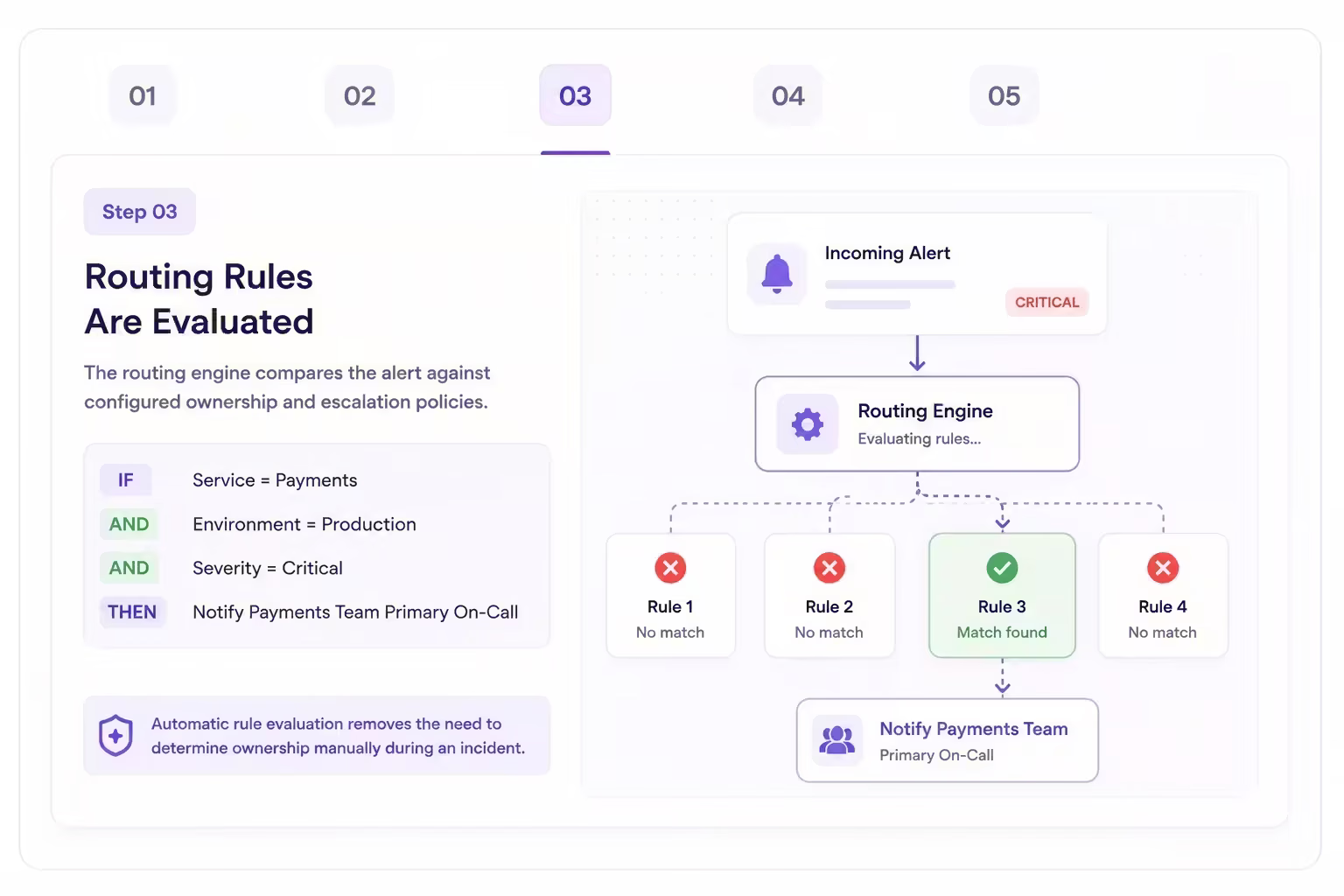
The routing engine compares the alert’s attributes against predefined rules connecting technical conditions with responsible teams, schedules, and escalation policies.
A routing rule may specify:
- If: Service = Payments
- And: Environment = Production
- And: Severity = Critical
- Then: Notify the Payments Team’s primary on-call responder
Automatic rule evaluation determines ownership immediately, eliminating the need for someone to review and forward the alert manually.
4. The Correct Responder Is Selected
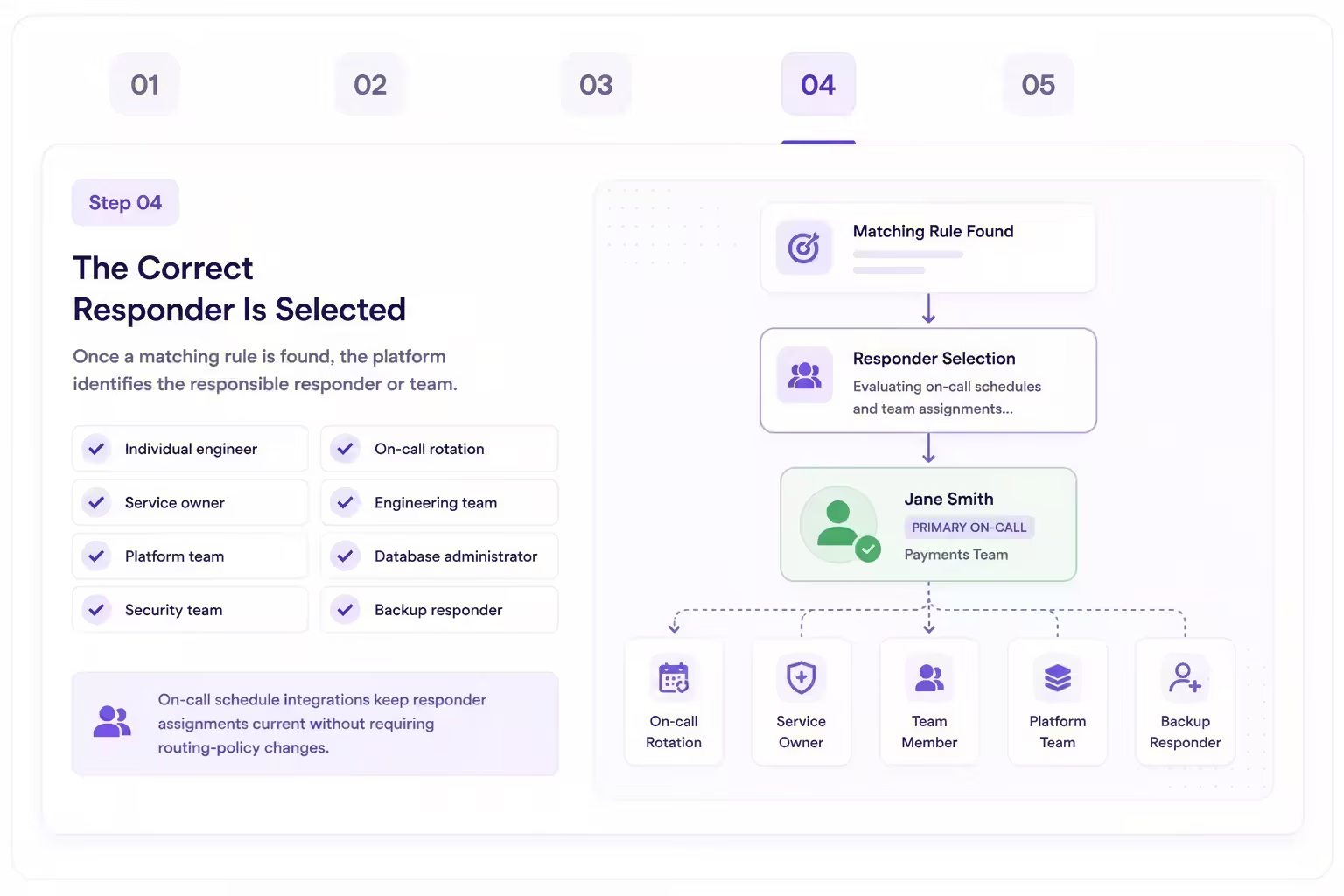
After finding a matching rule, the platform determines who is currently responsible for responding.
The alert may be assigned to:
- An individual engineer
- The active member of an on-call rotation
- A service owner
- An engineering or platform team
- A database administrator
- A security team
- A backup responder
On-call schedule integrations account for current shifts, overrides, time zones, and availability. This keeps responder assignments accurate even as on-call coverage changes.
5. Notifications Are Delivered
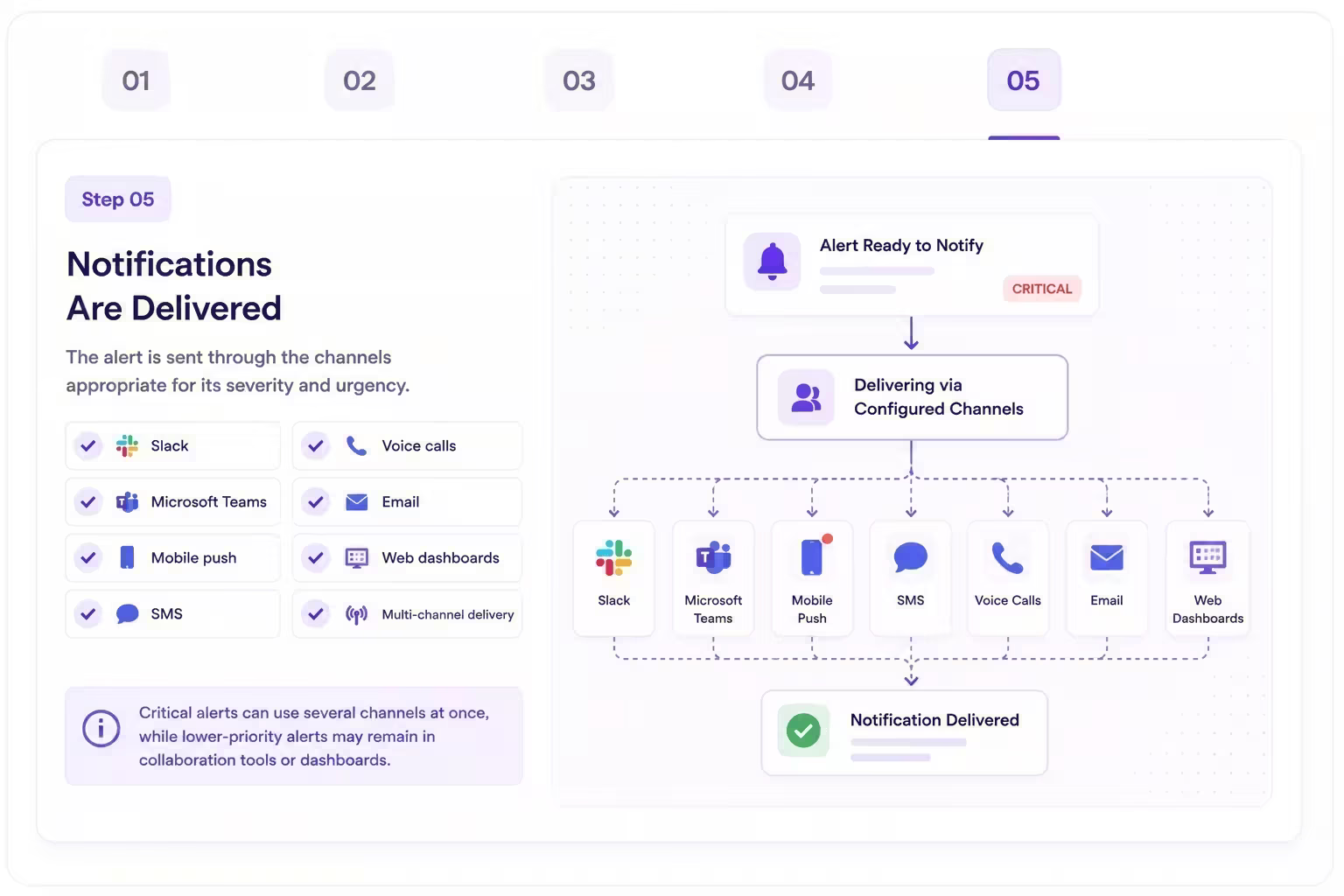
The platform sends the alert through channels configured for its severity and urgency.
Notification channels may include:
- Mobile push notifications
- SMS
- Voice calls
- Slack
- Microsoft Teams
- Incident management dashboards
- Multiple channels at once
Critical alerts may use several channels simultaneously to increase the likelihood of a fast response. Lower-priority alerts may remain in collaboration tools or dashboards to limit unnecessary interruptions. If the initial responder does not acknowledge the alert within the configured period, an escalation policy can notify a backup responder or the next level of the on-call rotation.
Common alert routing rules
Routing rules determine where an alert goes after it enters the alert management platform. Rather than relying on a single rule, most organizations combine multiple routing conditions to ensure alerts reach the most appropriate responder based on the affected service, environment, business impact, and operational context.
As infrastructure grows, routing rules become an essential part of maintaining operational efficiency. Well-designed rules eliminate manual decision-making while ensuring engineers only receive alerts they are responsible for handling.
1. Service-Based Routing
Service ownership is one of the most common routing strategies in modern engineering organizations.
Each production service has a designated owner or owning team, allowing alerts to be routed directly to the engineers responsible for maintaining that service.
For example:
| Service | Routed To |
|---|---|
| Authentication API | Identity Team |
| Payment Processing | Payments Team |
| Customer Dashboard | Frontend Team |
| Search Platform | Search Engineering |
| Kubernetes Cluster | Platform Engineering |
This approach scales well because ownership remains consistent even as engineering teams grow. Instead of routing alerts based on individual engineers, organizations route them based on the services those engineers own.
Service-based routing also reduces confusion during incidents since responders already understand the systems they’re being asked to investigate.
2. Ownership-Based Routing
While service routing focuses on applications, ownership-based routing ensures every asset in the environment has an accountable team.
Ownership can include:
- Applications
- APIs
- Databases
- Infrastructure
- Kubernetes clusters
- Cloud resources
- Internal platforms
- Shared services
Many organizations maintain service catalogs that map every production resource to its owner. The routing engine references this ownership information whenever an alert is generated.
For example, if a database replication alert occurs, the system can automatically notify the Database Operations team instead of the application developers.
Keeping ownership records current is critical. As teams reorganize, services are migrated, or new applications are introduced, routing policies should be updated to reflect these changes.
3. Environment-Based Routing
Not every alert requires the same level of urgency.
Routing policies often consider the environment where the issue occurs.
A common approach looks like this:
| Environment | Typical Routing |
|---|---|
| Production | Primary on-call engineer |
| Staging | Development team Slack channel |
| Development | Service owners or development notifications |
| Test | Dashboard only or suppressed notifications |
Production alerts generally require immediate attention because they affect customers.
Development and staging environments, on the other hand, often generate alerts during deployments, testing, or experimentation. Routing these notifications differently helps engineering teams stay informed without interrupting critical work unnecessarily.
3. Severity-Based Routing
Alert severity influences who receives notifications and how urgently they should respond.
Typical routing might include:
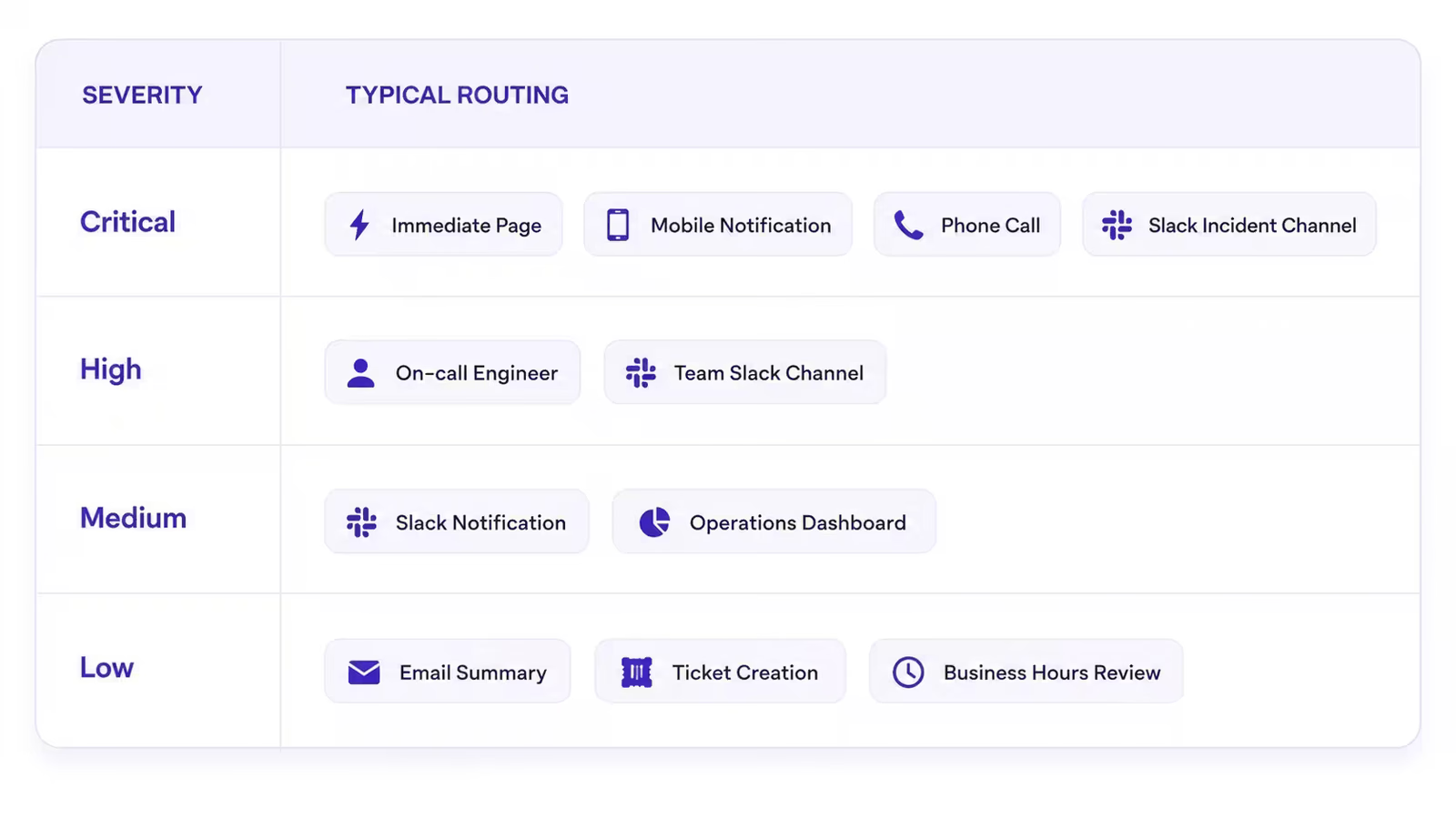
Severity-based routing ensures engineers are interrupted only when the operational impact justifies immediate attention.
4. Time-Based Routing
Engineering organizations rarely operate with the same staffing throughout the day.
Routing policies frequently change depending on the time an alert occurs.
For example:
Business Hours
- Service owner
- Platform engineer
- Development team
Evenings
- Primary on-call engineer
Weekends
- Dedicated incident response rotation
This approach allows organizations to maintain continuous coverage without requiring every engineer to remain available around the clock.
Time-aware routing is especially valuable for globally distributed teams where local working hours vary across regions.
5. Geographic Routing
Large organizations often deploy services across multiple regions.
Instead of sending every alert to a central operations team, alerts can be routed based on geography.
Examples include:
- US-East infrastructure → North American operations
- European services → Europe, the Middle East, and Africa (EMEA) engineering
- Asia-Pacific workloads → Asia-Pacific (APAC) support team
Regional routing allows engineers with local expertise to respond more quickly while reducing unnecessary handoffs across time zones.
It also supports follow-the-sun operational models, where responsibility shifts naturally between global engineering teams as business hours change.
6. Customer or Tenant-Based Routing
Organizations operating multi-tenant Software as a Service (SaaS) platforms sometimes create routing rules based on customer segmentation.
For example:
- Enterprise customers
- Government customers
- Healthcare customers
- Premium support accounts
An issue affecting a strategic customer may require a dedicated engineering team or specialized support group, while smaller customer issues may follow standard routing paths.
This ensures high-priority customers receive the appropriate operational attention without changing the underlying monitoring system.
7. Tag-Based Routing
Modern monitoring platforms attach metadata, or tags, to alerts.
Examples include:
- service=payments
- environment=production
- region=us-east-1
- team=platform
- cloud=aws
Routing engines use these tags to evaluate policies dynamically.
For example:
If
- service=checkout
- environment=production
- severity=critical
Then
Notify:
- Checkout Team On-Call
- Incident Slack Channel
Tag-based routing provides flexibility because new services can often inherit existing routing logic simply by applying standardized metadata.
Dynamic alert routing
Static routing rules work well for stable environments, but modern cloud infrastructure changes constantly. Services are deployed multiple times a day, workloads shift between regions, ownership changes, and on-call schedules rotate automatically.
Dynamic alert routing adapts to these changes without requiring engineers to manually update routing policies every time the environment evolves.
Instead of relying on fixed recipients, dynamic routing uses real-time operational context to determine the most appropriate responder.
For example, if ownership of a service changes from one engineering team to another, alerts automatically follow the new ownership assignment rather than continuing to notify the previous team.
Similarly, if an engineer rotates off an on-call schedule, the routing system immediately begins notifying the next scheduled responder without requiring any configuration changes.
Dynamic routing can also account for deployment activity. If an alert occurs immediately after a production release, organizations may choose to notify the deployment owner first because they have the most context about recent changes.
Other examples include routing based on:
- Active on-call schedules
- Current service ownership
- Cloud region
- Kubernetes namespace
- Business hours
- Maintenance windows
- Team availability
Because routing decisions are made using current operational data, dynamic routing reduces manual administration while improving the accuracy of notifications.
As organizations scale their infrastructure, this flexibility becomes increasingly important. Static routing rules that once worked for a handful of services quickly become difficult to maintain across hundreds of applications, multiple environments, and globally distributed teams.
Dynamic routing helps ensure alerts continue reaching the right responders even as systems, teams, and responsibilities evolve.
Building an ownership model for alert routing
Effective alert routing depends on one foundational principle: every production service should have a clearly defined owner.
Without ownership, routing rules become difficult to maintain. Alerts may be sent to outdated distribution lists, multiple teams may assume someone else is responsible, or incidents may be delayed while engineers determine who should respond.
An ownership model establishes accountability by connecting every service, application, and infrastructure component to the team responsible for its operational health.
Rather than routing alerts to individuals whenever possible, organizations should route alerts to teams and services. Individual responders can then be determined through on-call schedules, ensuring routing rules remain stable even as personnel changes occur.
A mature ownership model typically defines:
- Primary owning team
- Secondary or backup team
- Current on-call rotation
- Service documentation
- Communication channels
- Operational contacts
For example:
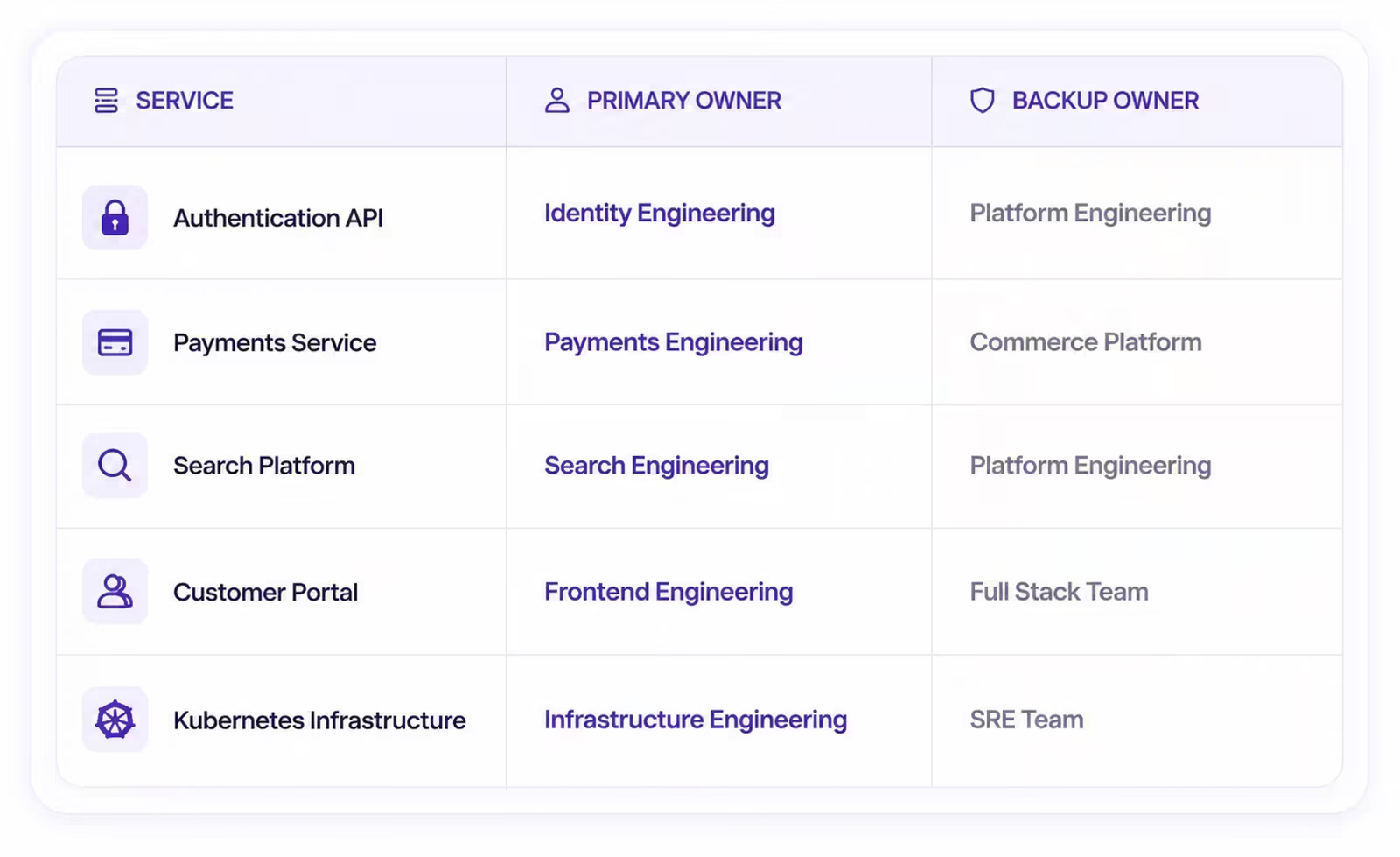
This structure gives responders immediate clarity about responsibility during an incident while reducing confusion across engineering teams.
Service Ownership Should Reflect Business Responsibility
Ownership should represent the team responsible for maintaining and improving a service, not simply the team that originally built it.
As organizations grow, services often transition between engineering groups. Routing policies should evolve alongside these ownership changes.
For example, a feature initially developed by a product engineering team may later become part of a dedicated platform team. Updating service ownership ensures future alerts continue reaching the engineers most familiar with the system.
Maintaining an accurate ownership model also simplifies onboarding, operational reviews, and incident investigations because responsibilities remain clearly documented.
Keep Ownership Information Current
Ownership is not static.
Teams reorganize, applications are retired, cloud resources migrate, and new services are introduced regularly.
Organizations should periodically review:
- Newly deployed services
- Retired infrastructure
- Team reorganizations
- Ownership transfers
- On-call rotations
- Shared platform responsibilities
Treating ownership as a living part of the engineering environment helps prevent routing failures caused by outdated information.
Team-based alert routing
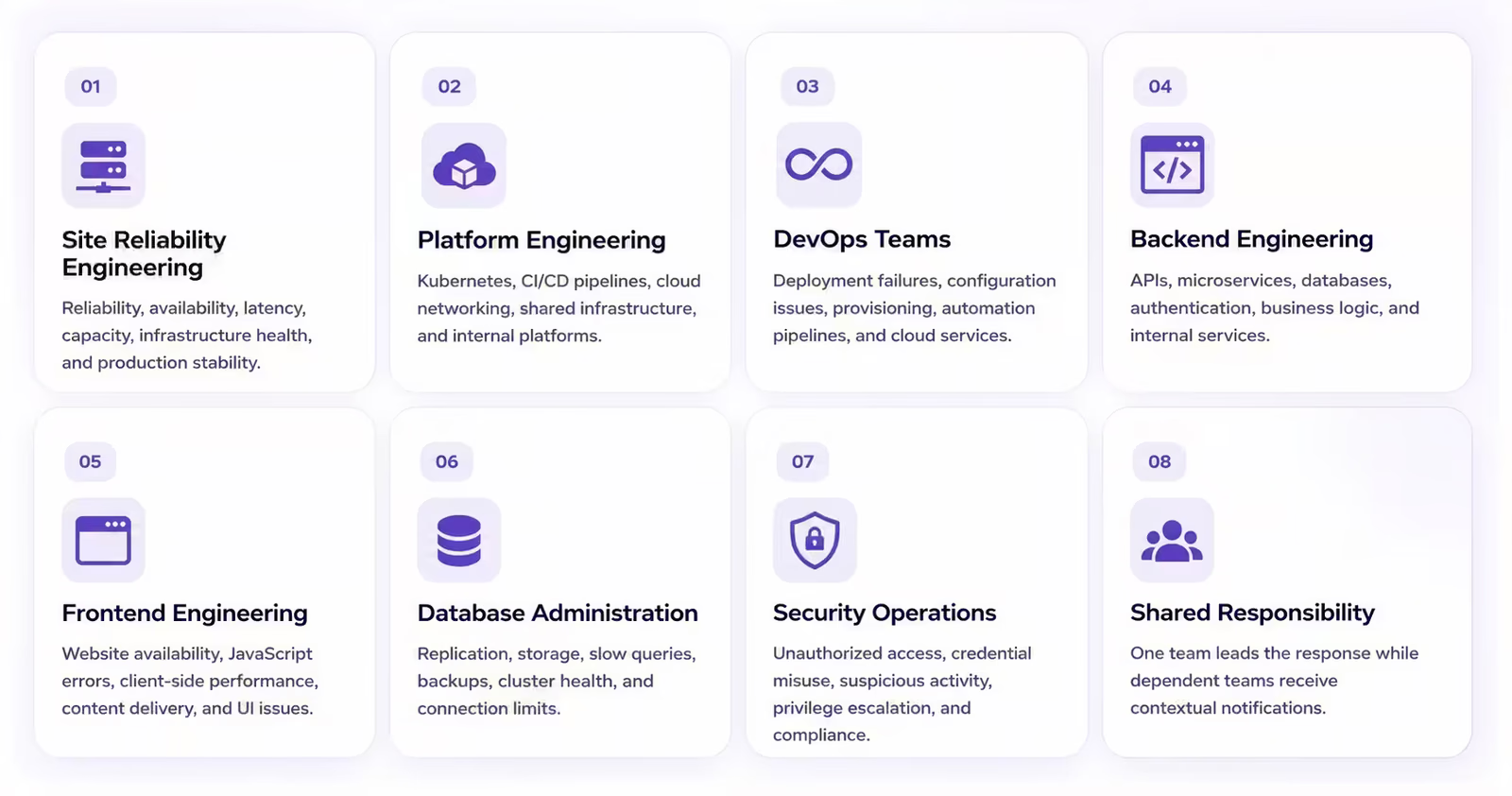
While services define what is affected, engineering teams determine who responds.
Many organizations organize routing around specialized teams with distinct operational responsibilities. This ensures alerts are handled by engineers with the appropriate expertise rather than a single centralized operations group.
Common routing destinations include:
- Site Reliability Engineering: Reliability, availability, latency, capacity, infrastructure health, and production stability alerts.
- Platform Engineering: Kubernetes, cloud networking, CI/CD pipelines, shared infrastructure, and internal platform alerts.
- DevOps Teams: Deployment failures, configuration issues, provisioning errors, automation pipelines, and cloud service alerts.
- Backend Engineering: APIs, microservices, authentication, databases, business logic, and internal service alerts.
- Frontend Engineering: Website availability, JavaScript errors, client-side performance, content delivery, and user interface alerts.
- Database Administration: Replication failures, storage capacity, slow queries, backups, cluster health, and connection-limit alerts.
- Security Operations: Unauthorized access, credential misuse, suspicious activity, privilege escalation, and compliance alerts.
- Shared Responsibility: One team leads the incident response while other dependent teams receive contextual notifications or join when their systems are affected.
Team-based routing reduces unnecessary notifications and helps incidents reach the people with the knowledge and access required to investigate them. For incidents involving multiple services, the platform can notify several teams while assigning one team as the primary owner to coordinate the response.
Routing alerts through Slack
Slack has become one of the primary destinations for operational alerts because it enables engineering teams to receive notifications where they already collaborate throughout the day.
Rather than constantly switching between monitoring dashboards, ticketing systems, and communication tools, engineers can receive alerts directly within dedicated Slack channels or personal notifications.
Slack should not replace an alert management platform, but it serves as an effective delivery channel that helps responders quickly recognize, discuss, and coordinate around incidents.
Team Channels
Many organizations create dedicated Slack channels for engineering teams or services.
Examples include:
- #payments-alerts
- #platform-alerts
- #database-ops
- #frontend-alerts
- #security-alerts
Routing alerts to service-specific channels keeps discussions focused and ensures notifications reach the engineers responsible for that area of the platform.
Direct Notifications for On-Call Responders
Critical production alerts often require immediate attention.
Instead of posting only to a public channel, alert management platforms can send direct Slack notifications to the engineer currently on call.
This allows responders to acknowledge alerts quickly while still maintaining visibility for the broader team through shared channels.
Incident Channels
When an alert develops into a confirmed incident, organizations frequently create dedicated Slack channels to coordinate the response.
Routing alerts into these channels provides responders with immediate context, allowing engineering, support, and leadership teams to collaborate in a single location throughout the incident lifecycle.
Keeping Notifications Actionable
Slack channels can become noisy if every operational event is delivered indiscriminately.
To keep notifications useful, organizations should:
- Route only actionable alerts to engineering channels.
- Separate production alerts from development notifications.
- Use consistent channel naming conventions.
- Keep service ownership aligned with channel ownership.
- Periodically review which alerts are delivered to each channel.
A well-organized Slack routing strategy ensures engineers receive relevant notifications without overwhelming collaboration channels with low-priority operational events.
Common alert routing mistakes
Even organizations with mature monitoring systems can struggle with inefficient alert routing. As infrastructure expands and engineering teams evolve, routing rules that once worked well may become outdated or unnecessarily complex.
Reviewing routing policies regularly helps ensure alerts continue reaching the right responders without creating operational friction.
Even organizations with mature monitoring systems can struggle with inefficient alert routing. As infrastructure expands and engineering teams evolve, routing rules that once worked well may become outdated or unnecessarily complex.
Reviewing routing policies regularly helps ensure alerts continue reaching the right responders without creating operational friction.
1. Sending Every Alert to Everyone - broad distribution creates unnecessary noise and makes important alerts easier to miss.
2. Routing Alerts to Individuals - hardcoding engineers into routing rules creates maintenance issues when schedules or roles change.
3. Missing or Unclear Ownership - alerts may be delayed when teams do not know who owns the affected service.
4. Using Outdated Static Rules - routing policies can become inaccurate as services, infrastructure, and teams change.
5. Ignoring Business Impact - critical customer-facing services should receive more urgent routing than lower-priority internal systems.
6. Creating Overly Complex Rules - too many exceptions and nested conditions make routing difficult to maintain and troubleshoot.
7. Failing to Test Routing Policies - regular testing confirms that alerts reach the correct responders and notification channels.
Best practices for effective alert routing
Successful alert routing is not simply about creating notification rules. It requires an operational process that evolves alongside infrastructure, engineering teams, and business priorities.
The following practices help organizations maintain reliable routing at scale.
1. Establish Clear Service Ownership - assign every production service a primary team, backup team, on-call schedule, and communication channel.
2. Route Alerts by Service - route alerts to services or teams rather than individual engineers to reduce maintenance as roles change.
3. Standardize Alert Metadata - use consistent tags for service, team, environment, region, and severity to support accurate routing.
4. Keep Routing Policies Simple - create reusable routing patterns instead of complex rules with too many exceptions.
5. Review Routing Policies Regularly - audit routing rules after infrastructure changes and check for outdated ownership, retired services, and missing policies.
6. Align Routing With On-Call Schedules - automatically route alerts to the engineer currently responsible for the affected service.
7. Document Routing Decisions - record which services each rule covers, who should respond, and where notifications are delivered.
8. Test Routing Through Simulations - use incident exercises to confirm alerts reach the correct responders and communication channels.
How modern alert management platforms improve alert routing
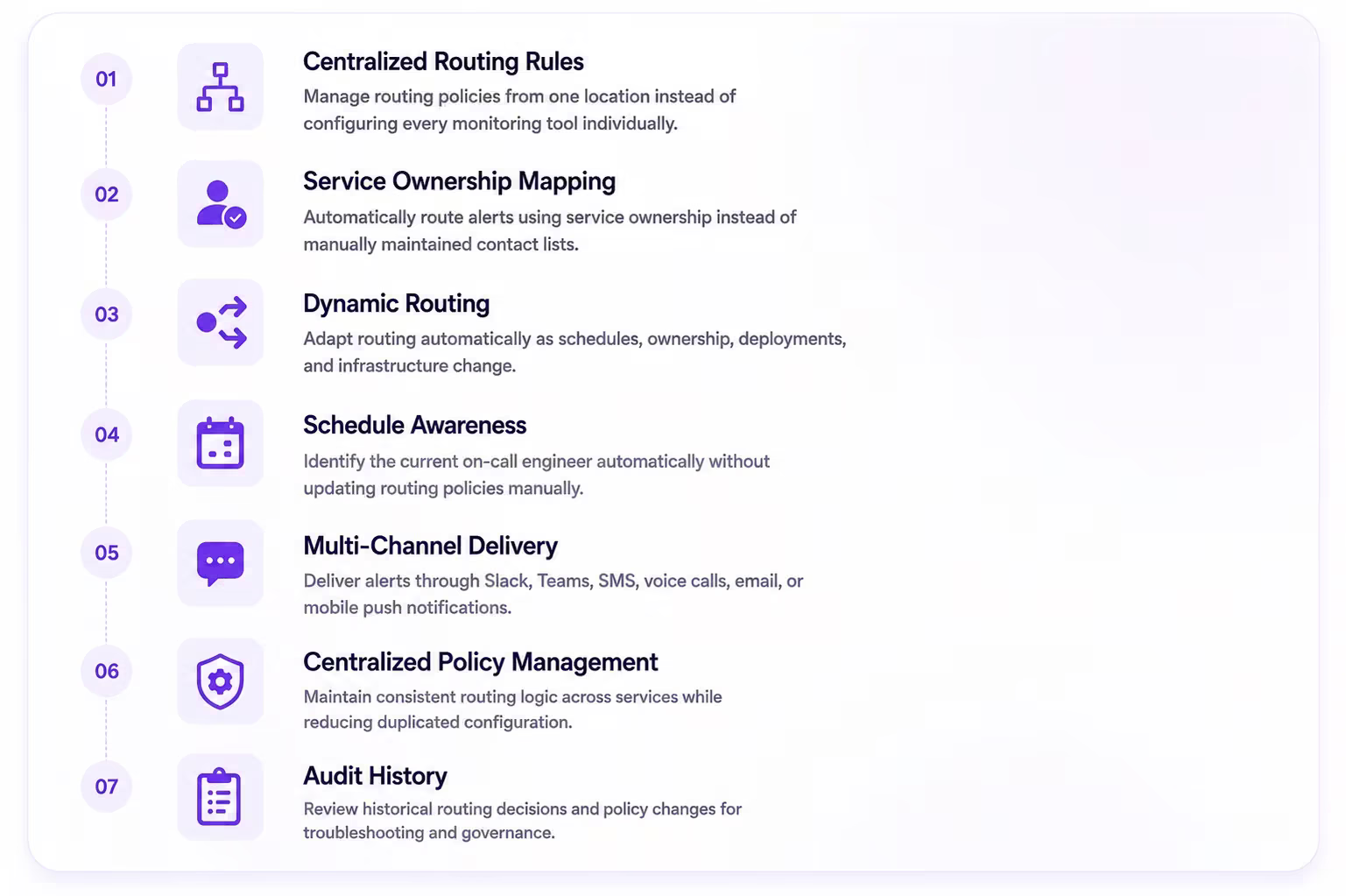
As engineering organizations grow, managing routing rules manually becomes increasingly difficult. Modern alert management platforms centralize routing logic, making it easier to deliver alerts consistently across large and complex environments.
Rather than configuring routing independently within every monitoring tool, engineering teams can define centralized policies that apply across multiple systems and services.
Key capabilities include:
- Centralized routing rules: Manage routing policies from one location instead of configuring every monitoring tool individually.
- Service ownership mapping: Connect services with their responsible teams so alerts can be routed automatically without relying on manually maintained contact lists.
- Dynamic routing: Adapt routing decisions as service ownership, deployments, infrastructure, and team responsibilities change.
- Schedule awareness: Identify the engineer currently on call based on rotations, overrides, availability, and time zones.
- Multi-channel delivery: Send alerts through Slack, Microsoft Teams, SMS, voice calls, email, mobile push notifications, or several channels simultaneously.
- Centralized policy management: Apply consistent routing logic across services while reducing duplicated rules and configuration drift.
- Audit history: Review previous routing decisions and policy changes to troubleshoot missed alerts, identify configuration problems, and support governance.
These capabilities make alert routing easier to scale while reducing manual maintenance and inconsistent configurations. They also help ensure that alerts continue reaching the correct responders as services, infrastructure, ownership, and on-call schedules evolve.
Frequently asked questions
What happens when an alert does not match any routing rule?
Alerts that do not match a routing rule should be sent to a clearly defined fallback destination, such as a central operations team, Site Reliability Engineering team, or default on-call rotation. Organizations should regularly review unmatched alerts because they may indicate missing ownership information, inconsistent metadata, or gaps in the routing configuration.
Can one alert be routed to multiple teams?
Yes. An alert can notify multiple teams when an issue affects shared infrastructure or several dependent services. However, the routing policy should still identify one primary owner responsible for leading the response. Supporting teams can receive informational notifications through Slack channels, dashboards, or incident communication workflows.
How should alerts be routed during planned maintenance?
During planned maintenance, routing policies can temporarily suppress expected alerts, lower their severity, or direct them to a maintenance channel instead of paging the on-call responder. Maintenance windows should be carefully scoped so that unrelated or unexpected production issues continue reaching the appropriate engineers.
What metrics should teams use to evaluate alert routing performance?
Teams can evaluate routing performance by tracking metrics such as Mean Time to Acknowledge, alert reassignment rate, escalation frequency, unmatched alert volume, and the percentage of alerts delivered to the correct team on the first attempt. A high number of transfers or escalations may indicate unclear ownership or inaccurate routing rules.
How can teams prevent routing loops or duplicate notifications?
Routing loops and duplicate notifications can be prevented by establishing clear rule priorities, defining mutually exclusive routing conditions, deduplicating alerts before delivery, and testing policy changes before deploying them. Teams should also review integrations to ensure the same alert is not being forwarded repeatedly between monitoring, alert management, and collaboration platforms.
Build more reliable alert routing
Alert routing is a foundational capability of modern alert management. By ensuring alerts are automatically delivered to the engineers responsible for the affected services, organizations can reduce response delays, strengthen operational ownership, and improve the efficiency of incident response.
As systems become more distributed and engineering teams grow, maintaining accurate routing rules becomes just as important as monitoring itself. Regularly reviewing service ownership, simplifying routing policies, and aligning notifications with on-call schedules helps ensure alerts consistently reach the right responders at the right time.
At Rootly, alert routing is built into a modern alert management platform that combines service ownership, dynamic routing rules, on-call schedules, and Slack-native workflows to deliver alerts to the appropriate responders automatically. By centralizing routing policies and integrating them with incident response processes, engineering teams can respond faster, reduce operational overhead, and maintain reliable services at scale.
Alert routing: how to send alerts to the right responders